

You swing your legs out of bed, put your foot down, and a sharp, stabbing pain shoots through your heel. After a few steps it eases off, only to come back after a long meeting or a drive home. A few weeks later, an X-ray report arrives with the words “calcaneal spur”, and suddenly you are picturing a sharp piece of bone digging into your foot with every step.
It’s a common worry, and an understandable one. Heel spurs and plantar fasciitis are often mentioned in the same breath, so many people assume they are the same thing. They are closely linked, but they are not identical. Knowing the difference between a heel spur and plantar fasciitis can save you a lot of unnecessary worry, and it points you towards the right treatment.
In this guide, our physiotherapists in Subang Jaya break down the differences between plantar fasciitis and heel spurs, how each one is diagnosed, and how physiotherapy helps you get back on your feet.
What Is Plantar Fasciitis?
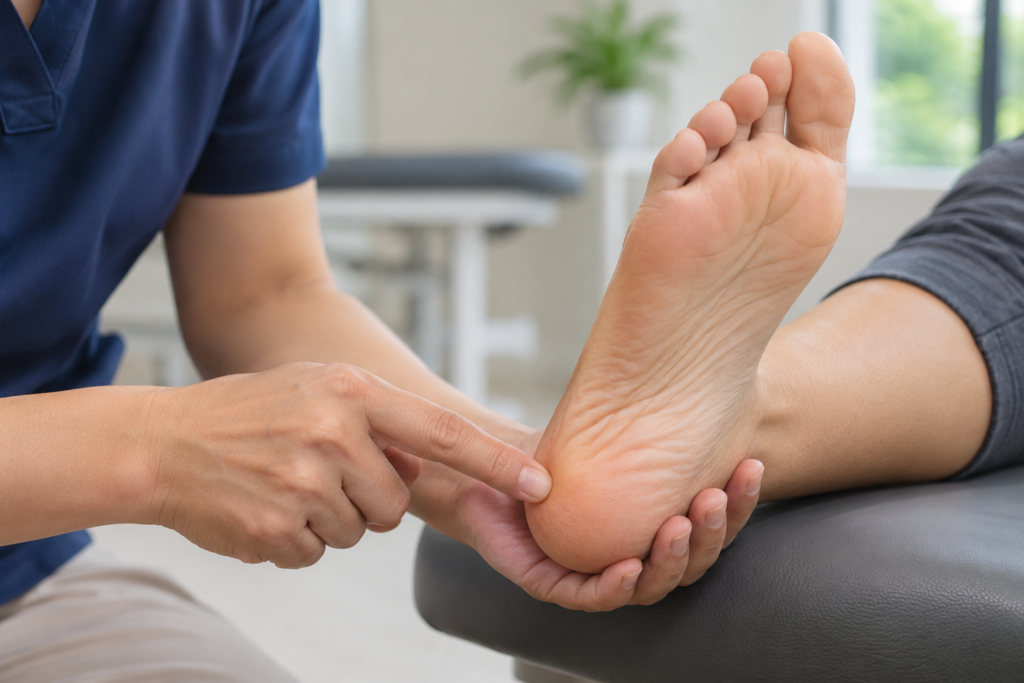
The plantar fascia is a thick, tough band of tissue that runs along the sole of your foot, from your heel bone to the base of your toes. It works a bit like a bowstring, supporting the arch and absorbing the forces that pass through your foot every time you stand, walk or run.
When this band is placed under more strain than it can handle, usually over weeks or months, it becomes irritated when it attaches to the heel. That irritation is plantar fasciitis. The result is pain on the underside of the heel, typically at its worst with the first steps in the morning or after sitting for a while.
Plantar fasciitis is one of the most common causes of heel pain we see at our clinic, in everyone from runners and badminton players to retail staff, nurses and office workers who spend their weekends on their feet. For a deeper look at exercises and treatment, read our guide to plantar fasciitis physiotherapy.
Heel Spur vs Plantar Fasciitis: Key Differences
Although the two often show up together, there are clear differences between plantar fasciitis and heel spurs. Here is how they compare at a glance.
| Plantar fasciitis | Heel spur |
What it is | Irritated soft tissue (the plantar fascia) | A bony growth on the heel bone |
Main symptom | Sharp heel pain, worst with the first steps in the morning or after rest | Often none; when painful, it feels much like plantar fasciitis |
How it is found | Physical examination and your description of symptoms | X-ray |
Does it cause pain? | Yes, it is the usual source of heel pain | Usually not on its own |
Treatment | Stretching, strengthening, load management and physiotherapy | The same as plantar fasciitis; the spur itself rarely needs removing |
Soft Tissue Problem vs Bone Change
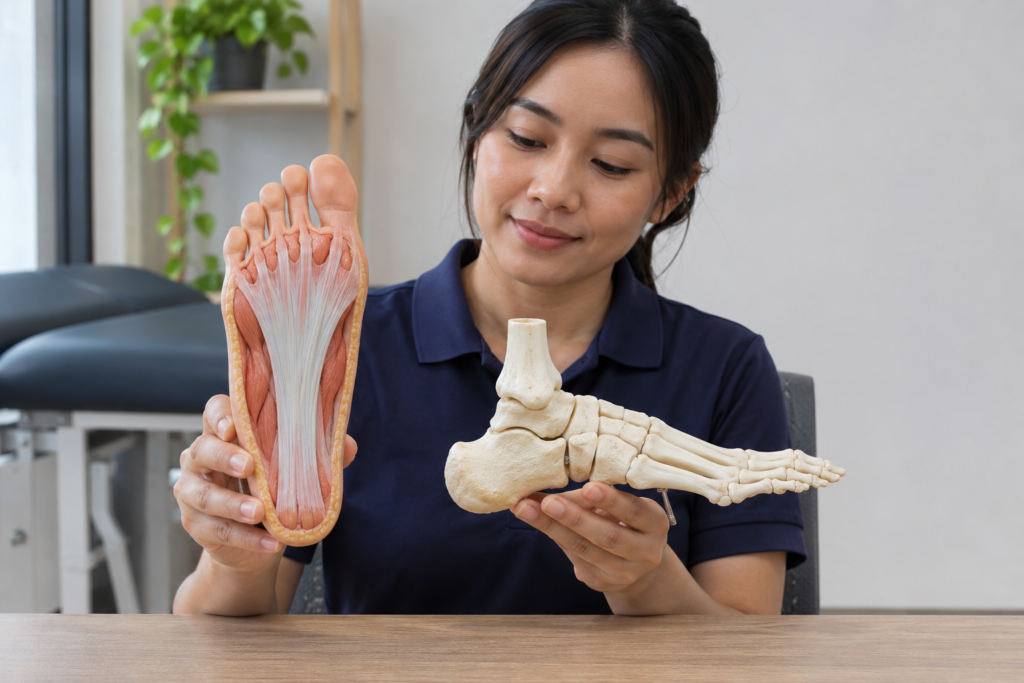
The most basic difference is what each one actually is. Plantar fasciitis is a problem in the soft tissue, the fascia that supports your arch. A heel spur is a change in the bone itself. Every other difference flows from this.
How the Pain Feels
Plantar fasciitis has a very recognisable pattern. The pain is sharp or stabbing under the heel with the first steps of the day, eases as the foot warms up, then returns after long periods of standing or after getting up from a chair. When a heel spur is painful, it usually feels almost exactly the same, which is a big reason the two are so often confused.
How Each Is Diagnosed
Plantar fasciitis is usually diagnosed through a physical examination and a conversation about your symptoms. A physiotherapist or doctor will press on specific spots on your heel and arch, check your calf flexibility and watch how you walk. An X-ray is not always needed.
A heel spur, on the other hand, can only be confirmed on an X-ray. It’s worth remembering that seeing a spur on an X-ray doesn’t automatically mean it is causing your pain. Many people with no heel pain at all would show a spur if they were X-rayed.
Are Heel Spurs and Plantar Fasciitis Connected?
Yes, but not in the way most people think. When the plantar fascia is under repeated tension for a long time, the body can respond by laying down extra bone where the fascia attaches to the heel. Over months or years, this can form a spur. That’s why the two conditions often turn up together, especially in people who have had heel pain on and off for a long time.
What the spur usually does not do is cause the pain. The American Academy of Orthopaedic Surgeons notes that heel spurs do not cause plantar fasciitis pain. The image of a sharp spike stabbing into your foot with every step is a common myth. In most cases, the pain comes from the irritated fascia around the spur, not the bone itself. This is good news, because it means that treating the fascia usually settles the pain, even though the spur stays where it is.
Common Causes and Risk Factors
Plantar fasciitis and heel spurs share many of the same risk factors, because both come down to how much load the bottom of the foot is taking.
Long Hours on Your Feet
Jobs that involve standing or walking on hard floors for most of the day, such as retail, nursing, F&B and factory work, place constant strain on the plantar fascia.
A Sudden Jump in Activity
Starting a new running plan, signing up for a charity walk, or suddenly playing more futsal or badminton can overload the fascia before it has time to adapt. If you are also noticing pain across the sole of your foot, our article on sole pain when walking covers other possible causes.
Tight Calves and Achilles Tendon
Tight calf muscles and a stiff Achilles tendon limit how far your ankle can bend, which pulls harder on the plantar fascia with every step.
Foot Shape
Both flat feet and high arches change how load is spread through the foot and can increase stress where the fascia meets the heel.
Unsupportive Footwear
Thin flat shoes, worn-out trainers and walking barefoot or in slippers at home all offer little cushioning or arch support. This is a common factor in Malaysia, where many of us spend much of the day in flip-flops or barefoot indoors.
Extra Body Weight
Carrying extra weight increases the load on the heel and the plantar fascia with every step, which can make symptoms more likely and slower to settle.
How Physiotherapy Treats Heel Spurs and Plantar Fasciitis
Because the pain usually comes from the plantar fascia rather than the spur, treatment focuses on calming the fascia and changing how load passes through your foot. The approach is the same whether your X-ray shows a spur or not.
A Thorough Assessment
Your physiotherapist will look at how your foot moves, how flexible your calves are, how strong your foot and hip muscles are, what shoes you wear, and what your work and exercise routine looks like. This helps pinpoint why your heel is overloaded in the first place, so treatment targets the cause and not just the pain.
Stretching and Strengthening

Calf and plantar fascia stretches help ease the pull on the heel, while strengthening exercises for the foot, ankle and hips help your foot handle load better over time. Our plantar fasciitis physiotherapy guide walks through some of these exercises.
Manual Therapy and Dry Needling
Hands-on manual therapy can ease tightness in the calf and foot and improve ankle movement. Dry needling may help release tight, sensitive spots in the calf and foot muscles that add to heel pain. Learn more in our article on dry needling for heel pain.
Taping, Footwear and Insoles
Supportive taping can offload the plantar fascia in the short term. Your physiotherapist can also advise on shoes with good cushioning and arch support, and on whether heel cushions or insoles might help your foot type.
Load Management
You don’t have to stop moving altogether. Instead, your physiotherapist will help you adjust how much and what kind of activity you do while the heel settles, for example swapping some runs for cycling or swimming, then building back up gradually. For runners and active people, our sports physiotherapy programme guides a safe return to training.
The outlook is encouraging. According to the American Academy of Orthopaedic Surgeons, more than 90% of people with plantar fasciitis improve within 10 months of starting simple treatment methods. Recovery takes patience, but most people get there without surgery.
Do Heel Spurs Need Surgery?
In most cases, no. Surgery to remove a heel spur on its own is rarely done, because the spur is usually not the source of the pain. Surgery for plantar fasciitis is generally only considered when symptoms have not improved after about 12 months of consistent non-surgical treatment.
If your heel pain is stubborn, your doctor may discuss other options, such as injections or shockwave therapy. These are usually used alongside, not instead of, an exercise-based rehabilitation programme.
When to See a Physiotherapist or Doctor
It’s a good idea to book an assessment if your heel pain has lasted more than two to three weeks despite rest and stretching, is affecting how you walk, or keeps coming back. Getting the right advice early can make recovery quicker and simpler.
See a doctor promptly if your heel pain started after a fall or injury, or if your heel is swollen, red or warm to the touch. The same applies if you have numbness or tingling in your foot, pain at night or at rest, or a fever alongside the heel pain, as these can point to other conditions that need medical attention.
Frequently Asked Questions About Heel Spur vs Plantar Fasciitis
Yes. Many people have a heel spur and never feel any pain from it. These spurs are often found by chance when an X-ray is taken for another reason. A spur on its own is usually not a problem and does not need treatment unless you also have heel pain.
Not usually. Plantar fasciitis is normally diagnosed through a physical examination and your description of symptoms. An X-ray is the only way to see a heel spur, and a doctor may order one to rule out other causes of heel pain, such as a stress fracture.
The bony growth itself usually stays. The good news is that the pain often settles once the irritated plantar fascia around it is treated with stretching, strengthening, footwear changes and physiotherapy, so most people do not need the spur removed.
Gentle walking in supportive shoes is generally fine and helps keep the foot moving. Cut back on long walks, runs or standing that clearly make the pain worse, and build up gradually. A physiotherapist can help you find the right balance of activity and rest.
Neither is automatically worse. Plantar fasciitis is usually the actual source of heel pain, while a heel spur is often painless. Both respond to the same kind of care, so the focus is on treating the pain and the reasons your heel is overloaded.
Get Heel Pain Treatment at Regenesis Physiotherapy

Whether your X-ray shows a heel spur or not, ongoing heel pain is not something you have to put up with. At Regenesis Physiotherapy in Sunway Geo Avenue, Subang Jaya, our physiotherapists will assess your foot, explain what is really causing your pain, and build a treatment plan that fits your work, training and daily life. Find out more about how we treat hip, knee and ankle pain.
We are open 9am to 8pm, Monday to Sunday, and also offer home visits across the Klang Valley.