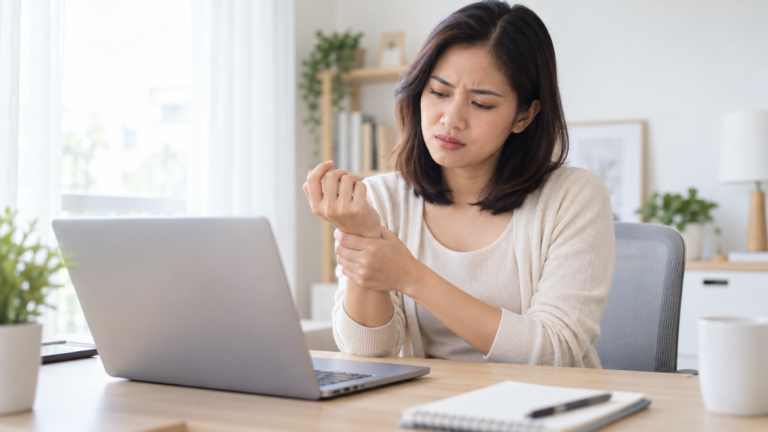

You bend down to put on your socks in the morning and your lower back simply refuses. By lunchtime it has loosened up, but after a long drive or an hour at your desk, the stiffness creeps back in. Then an X-ray report comes back with a word you have never heard before: spondylosis.
It sounds alarming, but lumbar spondylosis is very common, and for many people it responds well to the right kind of movement.
In this guide, our physiotherapists in Subang Jaya explain what lumbar spondylosis is, walk you through exercises you can start at home, and share how to treat spondylosis when exercise alone is not enough.
What Is Lumbar Spondylosis?
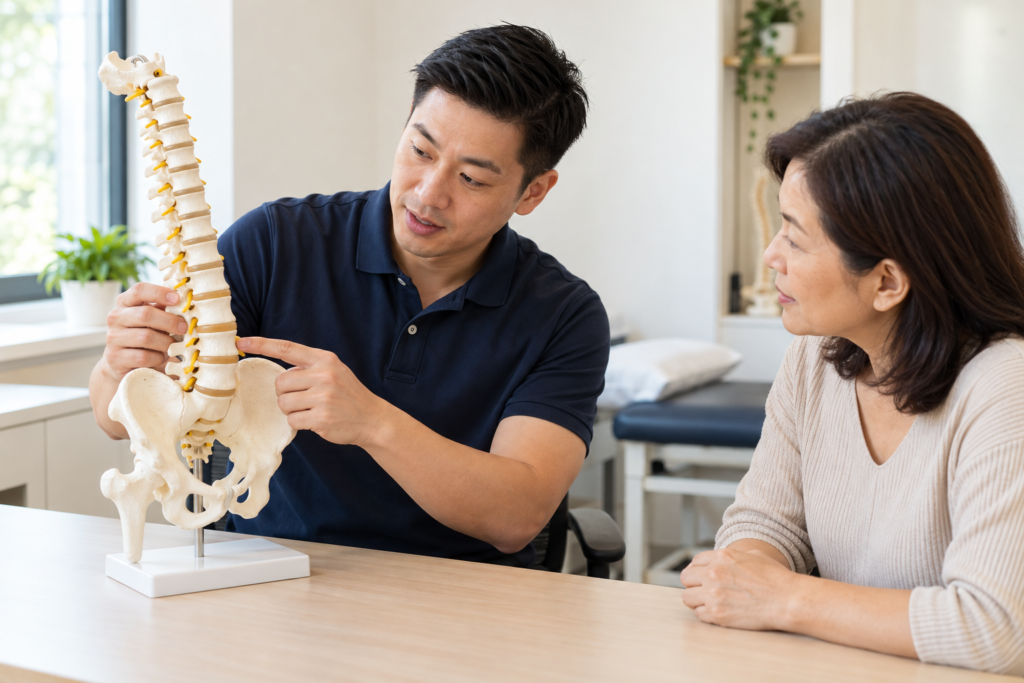
Lumbar spondylosis is wear and tear of the spine in the lower back. You may also hear it called spinal osteoarthritis or degenerative changes. It affects the five lumbar vertebrae (L1 to L5), the cushioning discs between them, and the small facet joints at the back of the spine.
What Happens Inside the Spine
Over the years, the discs gradually lose water and height, so they absorb shock less effectively. The facet joints take on more load and their cartilage thins. In response, the body may grow small bony ridges called bone spurs (osteophytes) along the edges of the vertebrae. The Hospital for Special Surgery notes that it is most often seen in the neck and lower back, and that the lower back is more prone to pain because it carries more of the body’s weight. If your symptoms are mainly in the neck, read our guide to cervical spine pain.
Who Gets It
Spondylosis is largely a normal part of ageing, and most people will show some of these changes on a scan by middle age. Jobs that involve heavy lifting or long hours of sitting, a previous back injury, being overweight, smoking and a family history can all add to the load on the spine.
A Scan Is Not the Whole Story
One important point: many people have spondylosis on an X-ray or MRI and feel no pain at all. What you see on a scan does not always match how much it hurts. That is why treatment focuses on how your back moves and functions, not just on the picture.
Symptoms of Lumbar Spondylosis
Symptoms range from nothing at all to pain that affects daily life. They also tend to come and go in flare-ups.
Stiffness That Is Worst in the Morning
The most typical sign is a stiff, achy lower back first thing in the morning or after sitting still for a while, which eases once you get moving. Many people describe needing a few minutes to “warm up” their back before they can stand fully upright.
Pain With Certain Positions
Long periods of standing, arching backwards, or twisting can bring on a dull ache across the lower back. Sitting for too long, especially in a slumped position or a long drive, often does the same. You may also notice a grinding or clicking feeling when you move.
Pain, Tingling or Numbness Down the Leg
If a bone spur or a bulging disc presses on a nerve root, pain can travel into the buttock and down the leg, sometimes with pins and needles or numbness. This is often called sciatica. Our article on exercises for sciatica nerve pain covers this in more detail.
Leg Heaviness When Walking
When spondylosis narrows the space around the nerves in the spinal canal (spinal stenosis), some people feel heaviness, cramping or weakness in the legs after walking a short distance. A telling sign is that the legs feel better when you sit down or lean forward, for example on a shopping trolley.
Lumbar Spondylosis Exercises You Can Do at Home
Exercise is one of the most useful things you can do for lumbar spondylosis. It keeps the stiff joints moving, feeds the discs with fresh fluid and builds the muscles that take pressure off the spine. Specialists at the Hospital for Special Surgery list moves such as pelvic tilts, glute bridges, abdominal bracing and knee-to-chest stretches among the physiotherapist-guided exercises that help support the lower back.
Before you start, a few ground rules. Move slowly and within a comfortable range. Mild discomfort of around two or three out of ten is generally fine, but stop if you feel sharp pain, or if pain or tingling spreads further down your leg. Aim for once or twice a day, and expect it to take a few weeks of consistency before you notice a real difference.
1. Pelvic Tilt

Lie on your back with your knees bent and feet flat on the floor. Gently tighten your tummy muscles and press the small of your back into the floor, tilting your pelvis slightly upwards. Hold for five seconds, then relax. Repeat ten times. This is a gentle way to wake up the deep core muscles without loading the spine.
2. Knee-to-Chest Stretch
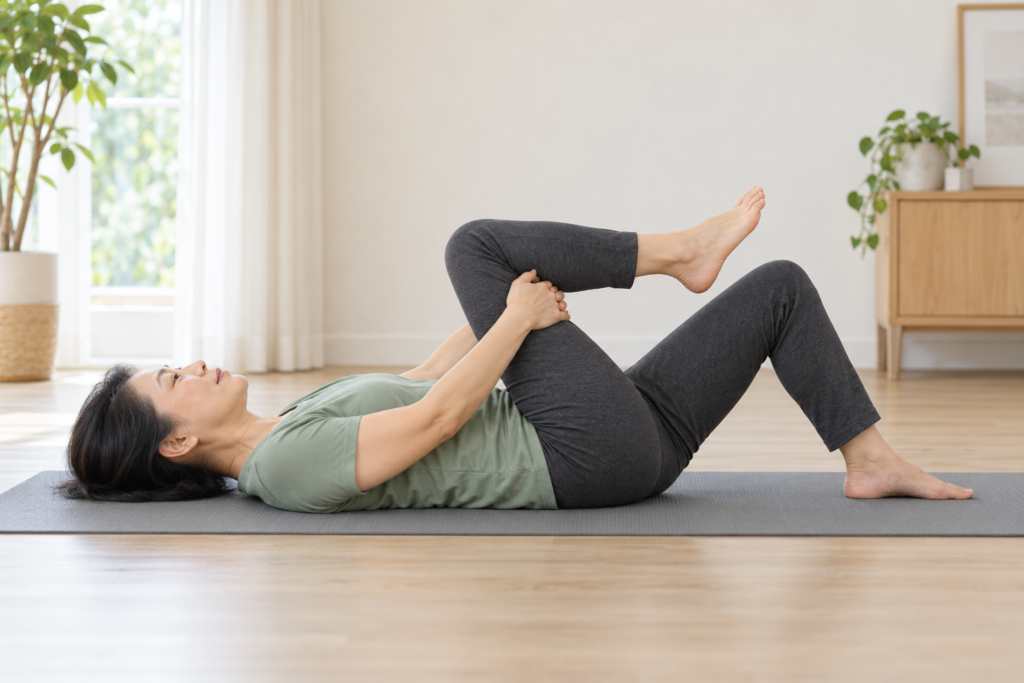
Lying on your back with knees bent, bring one knee up towards your chest and hold it with both hands behind the thigh. Hold for 20 to 30 seconds while breathing slowly, then switch sides. Once comfortable, you can bring both knees up together. Many people with spondylosis find this forward-bending stretch especially soothing because it opens up the space at the back of the spine.
3. Cat-Cow
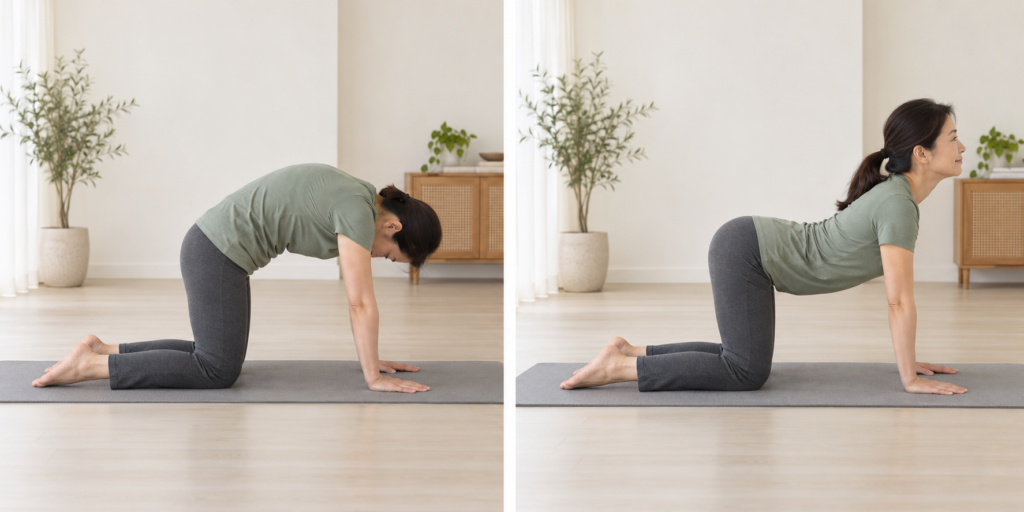
Get onto your hands and knees, hands under shoulders and knees under hips. Slowly round your back up towards the ceiling, letting your head drop, then gently let your tummy sink and lift your head. Keep the movement small and smooth. Repeat ten times. This is a good way to ease morning stiffness.
4. Glute Bridge
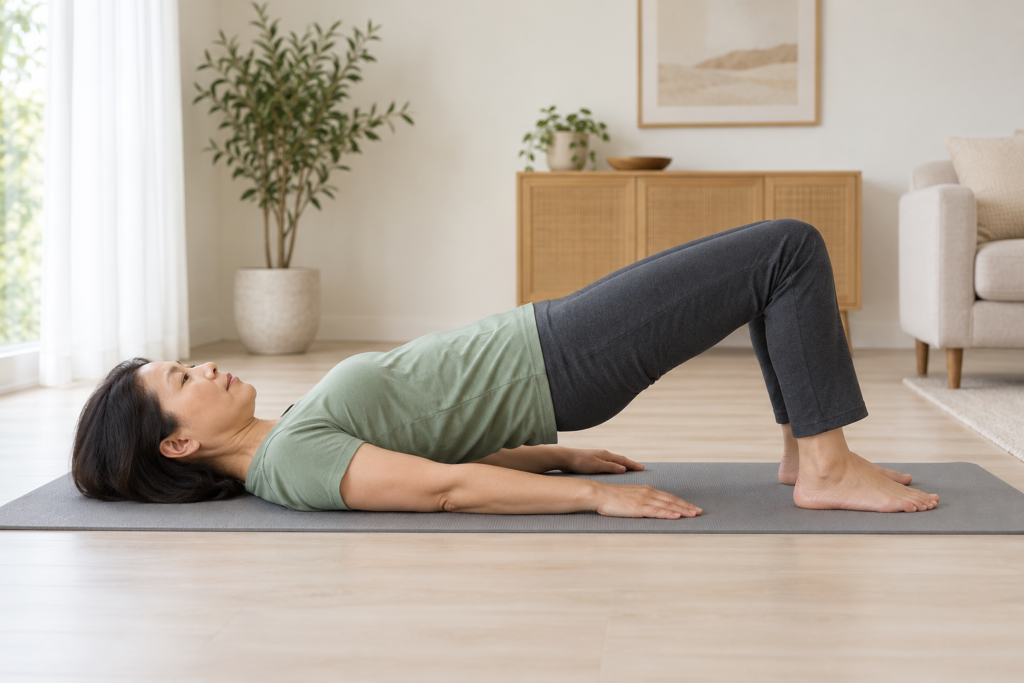
Lie on your back with knees bent and feet hip-width apart. Squeeze your buttocks and lift your hips until your body forms a straight line from shoulders to knees. Avoid arching your lower back at the top. Hold for three seconds and lower slowly. Do two sets of ten. Strong glutes share the work of the lower back during standing, walking and lifting.
5. Bird Dog
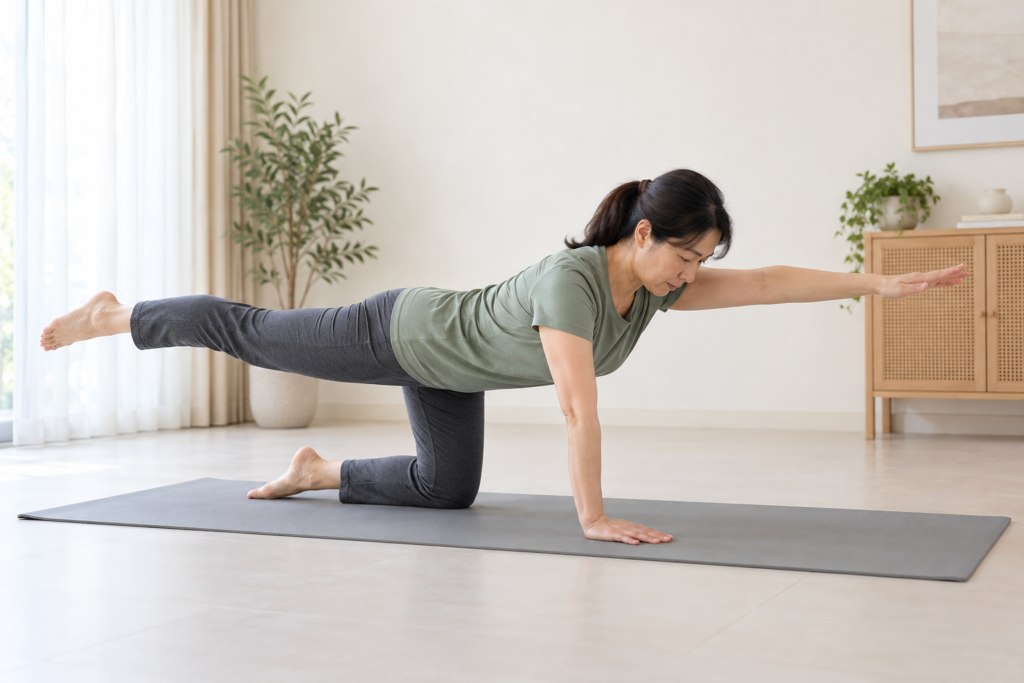
From hands and knees, tighten your tummy gently and slowly stretch one arm forward and the opposite leg back, keeping your back level like a tabletop. Hold for five seconds, return and swap sides. Do ten on each side. This trains the back and core to hold the spine steady while the limbs move.
6. Lower Trunk Rotation
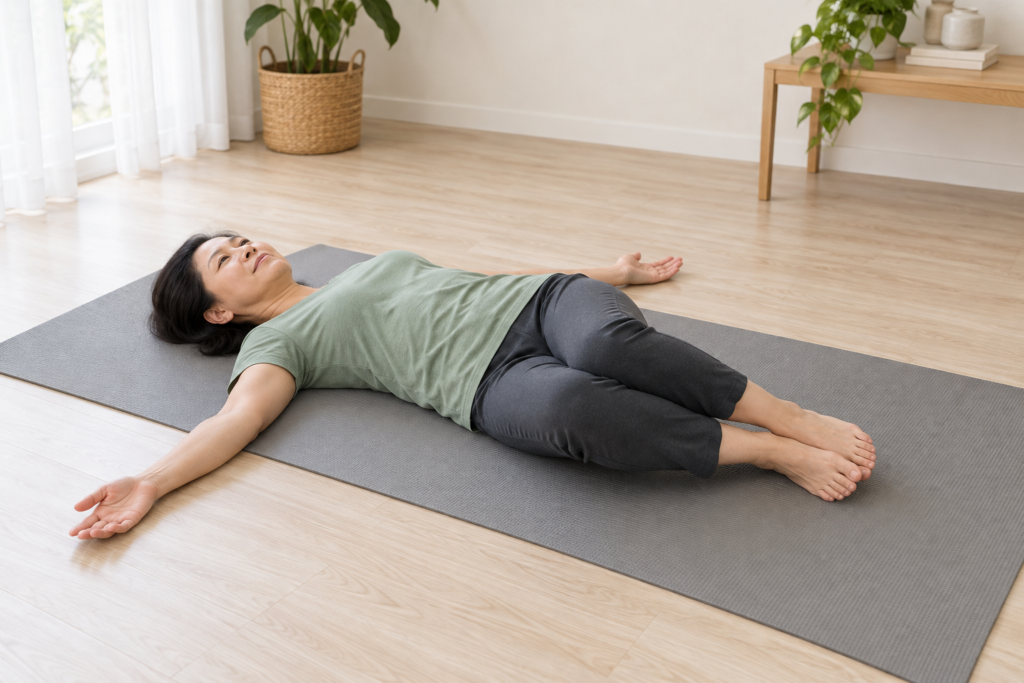
Lie on your back with knees bent and together. Slowly let both knees drop a little to one side, keeping your shoulders flat on the floor, then bring them back to the middle and go to the other side. Keep the range small at first. Repeat ten times each way.
7. Walking
Regular walking is one of the simplest lumbar spondylosis exercises and is easy to fit into daily life. Start with 10 to 15 minutes on flat ground and build up gradually. If your legs feel heavy after a while, take short breaks to sit down, and mention it to your physiotherapist. Swimming and stationary cycling are good alternatives for those who find walking uncomfortable.
If you are helping an older family member get started, our article on simple home exercises for elderly parents has more ideas for keeping movement safe at home
Movements to Modify or Avoid
You do not need to wrap your back in cotton wool, but a few movements tend to aggravate spondylosis, especially during a flare-up.
Deep Backward Bending
Arching far backwards, as in full cobra or wheel poses in yoga, squeezes the facet joints together and can stir up pain, particularly if you have narrowing around the nerves. Keep backward bends small, or leave them out until a physiotherapist has checked your back.
Heavy Lifting and Twisting Together
Lifting something heavy while rotating, such as swinging a bag of groceries out of the car boot, places a lot of load on the discs and joints. Bring the item close to your body, bend at the hips and knees, and turn with your feet rather than your back.
High-Impact Exercise During a Flare
Running, jumping and contact sports are not off limits forever, but they can make symptoms worse while the back is irritable. Switch to walking, swimming or cycling until things settle, then return gradually.
Staying Still for Too Long
This one surprises people. Long hours in one position, whether sitting at a desk, driving or lying in bed, often make spondylosis stiffness worse. Get up and move for a minute or two every 30 to 45 minutes.
How to Treat Spondylosis
There is no treatment that reverses the wear on the spine, but that is rarely the goal. The aim is to reduce pain, restore movement and help you do the things you enjoy again. For most people this is achieved without surgery.
Physiotherapy as the First Step
A physiotherapist will assess how your back moves, which positions trigger your symptoms, how strong your core and hip muscles are, and whether any nerves are involved. From there, you get a programme matched to your stage and lifestyle, which is safer and more effective than picking exercises at random from the internet. Find out more about our approach to back pain and spinal conditions.
Manual Therapy
Hands-on techniques such as spinal mobilisation and soft tissue release help free up stiff joints and tight muscles. In a small study of 30 adults aged 40 to 70 with lumbar spondylosis, Sharma and colleagues (2015) found that combining spinal mobilisation with stabilisation exercises reduced pain and disability more than traction and stretching over four weeks. It is a small study, but it reflects what physiotherapists see in practice: hands-on care works best alongside exercise. Learn more about our manual therapy sessions.
Dry Needling
Muscles around a stiff, painful spine often tighten up to protect it. Dry needling uses fine needles to release these tight spots in the lower back and buttock muscles, which can make it easier to move and exercise.
Heat, Posture and Daily Habits
A warm pack or warm shower in the morning can ease stiffness before you start moving. Your physiotherapist will also advise on sleeping positions, desk setup and safe lifting so that daily life puts less strain on your spine. Keeping to a healthy weight reduces the load on the lumbar joints too.
Medication and Medical Options
Your doctor may suggest pain relief or anti-inflammatory medicine for flare-ups, and in some cases spinal injections to calm an irritated nerve. Surgery is generally considered only when nerve compression causes significant weakness or symptoms persist despite a good course of non-surgical care. If you have related disc problems, our slipped disc treatment page explains how we manage those too.
When to See a Doctor Urgently
Most lumbar spondylosis can be managed with physiotherapy and exercise, but some signs mean a nerve is under significant pressure and you should see a doctor or go to an emergency department straight away.
Red Flag Symptoms
Seek urgent care if you notice new weakness in your leg or foot, such as your foot slapping down or catching when you walk, difficulty controlling your bladder or bowels, or numbness around the groin or inner thighs. Severe shooting, electric-shock pain, a sudden change in your balance, or back pain with fever or unexplained weight loss also need prompt medical attention.
Frequently Asked Questions About Lumbar Spondylosis
The changes in the spine cannot be reversed, but symptoms can often be well controlled. Many people with spondylosis live active lives with little or no pain by keeping their back mobile, strong and well supported.
Most gentle mobility exercises can be done once or twice a day, and strengthening exercises three to four times a week. Consistency matters more than intensity, so a short daily routine works better than an occasional long session.
Yes, walking is generally one of the best activities for lumbar spondylosis. Start with short, regular walks on flat ground and build up gradually. If your legs feel heavy or numb after walking a short distance, mention it to your physiotherapist.
Heat usually works better for the everyday stiffness of spondylosis, especially in the morning. Ice can help for a short period during a sudden flare-up. Use either for 15 to 20 minutes at a time with a cloth between the pack and your skin.
Spondylosis is general wear and tear across the joints, discs and bones of the spine that builds up over time. A slipped disc is when the soft centre of one disc bulges out and may press on a nerve. The two can occur together, and both are commonly treated with physiotherapy.
Get Lumbar Spondylosis Treatment at Regenesis Physiotherapy

A diagnosis of spondylosis does not mean you have to live with a stiff, sore back. At Regenesis Physiotherapy in Sunway Geo Avenue, Subang Jaya, our physiotherapists will look at how your back moves, explain what your scan does and does not mean, and build a plan of hands-on care and exercise that fits your daily life. Whether you want to sit through a workday more comfortably, walk further, or get back into the gym, you will leave with a clear plan.
We are open 9am to 8pm, Monday to Sunday, and also offer home visits across the Klang Valley for those who find travelling difficult.