
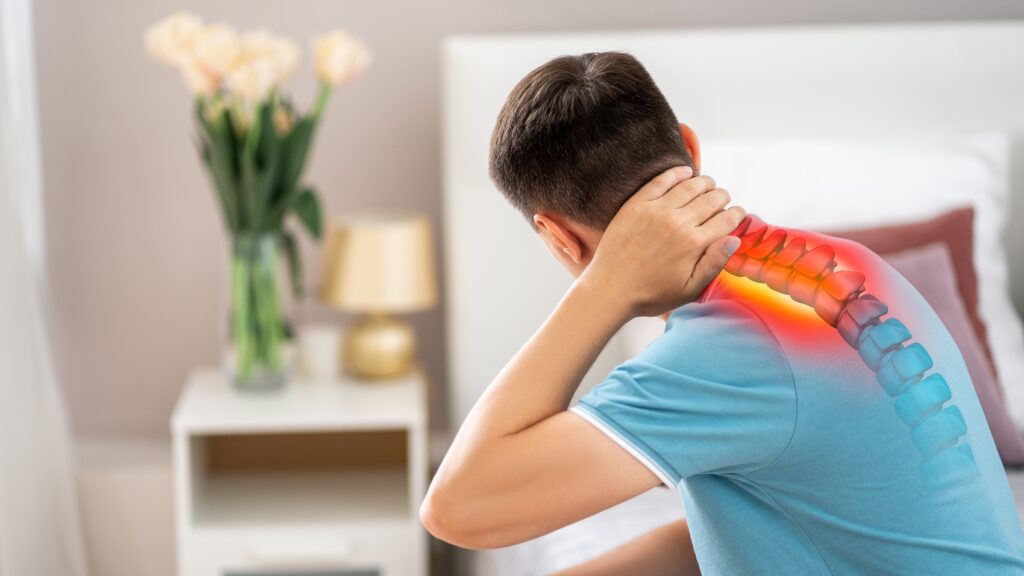
Cervical spine pain is when the bones, discs, joints, or nerves of the upper spine are involved, the symptoms can extend well beyond the neck into the shoulders, arms, and hands, and the underlying causes require more than general stretching.
The actual source of the problem is a disc, a joint, or a compressed nerve. Most cervical spine conditions, including disc herniations, nerve root irritation, and degenerative joint changes, respond well to physiotherapy without surgery.
What Is the Cervical Spine and Why Does It Hurt?
The cervical spine is the upper portion of the spine running through the neck. It consists of seven vertebrae, labelled C1 through C7, with intervertebral discs sitting between each pair to absorb load and allow movement. The facet joints connect adjacent vertebrae and guide how the neck moves.
Degenerative changes to the cervical discs and joints begin in many people during their thirties and forties and progress gradually with age. These changes show up on imaging and are often alarming to patients who see them described on scan reports. However, many people have significant changes on imaging with no symptoms at all. It’s only when both pain and imaging agree that professionals can identify and fix it.
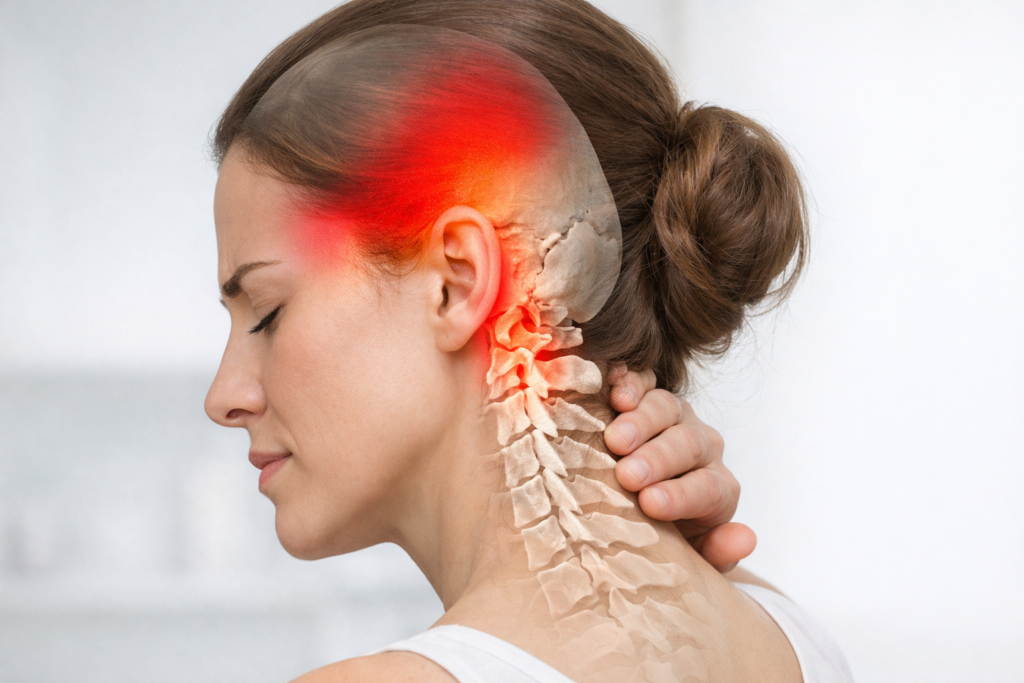
Can cervical spine pain cause headaches?
Yes. Cervicogenic headache is a well-recognised condition in which pain originates from the structures of the upper cervical spine and refers forward over the head. It typically starts at the base of the skull, is made worse by neck movement and sustained postures, and is usually one-sided. It is frequently misidentified as tension headache or migraine.
Common Causes of Cervical Spine Pain
Cervical Disc Herniation
A cervical disc herniation occurs when the outer wall of a disc weakens or tears, allowing the soft inner material to push outward. When this material presses on a nearby nerve root, the pain, numbness, tingling, or weakness can travel along the path of that nerve.
A herniation at C6, for example, typically produces symptoms into the thumb and index finger. A herniation at C7 tends to produce symptoms into the middle finger and triceps.
Cervical Spondylosis
Cervical spondylosis is an age-related degenerative change to the cervical discs and joints. The discs gradually lose height and develop bony outgrowths. It is extremely common and the majority of adults over 50 have some degree of spondylosis visible on imaging.
When spondylosis narrows the spinal canal significantly, they can reduce the space available for the spinal cord itself which is called cervical stenosis. When the spinal cord is compressed, the condition is called myelopathy.
Cervical Radiculopathy
Cervical radiculopathy occurs when a nerve root exiting the cervical spine is compressed or irritated. It is what most people mean when they describe a pinched nerve in the neck.
Cervical radiculopathy is frequently misdiagnosed as a shoulder problem, a rotator cuff issue, or lateral elbow pain, because the symptoms it produces in the arm and hand are felt at the location where the nerve travels rather than at the neck.
Cervical Facet Joint Pain
The facet joints are small paired joints connecting adjacent vertebrae at the back of the spine. When they become irritated or inflamed, they produce a pattern of neck and upper shoulder pain that is distinct from disc or nerve involvement.
Postural Cervical Pain
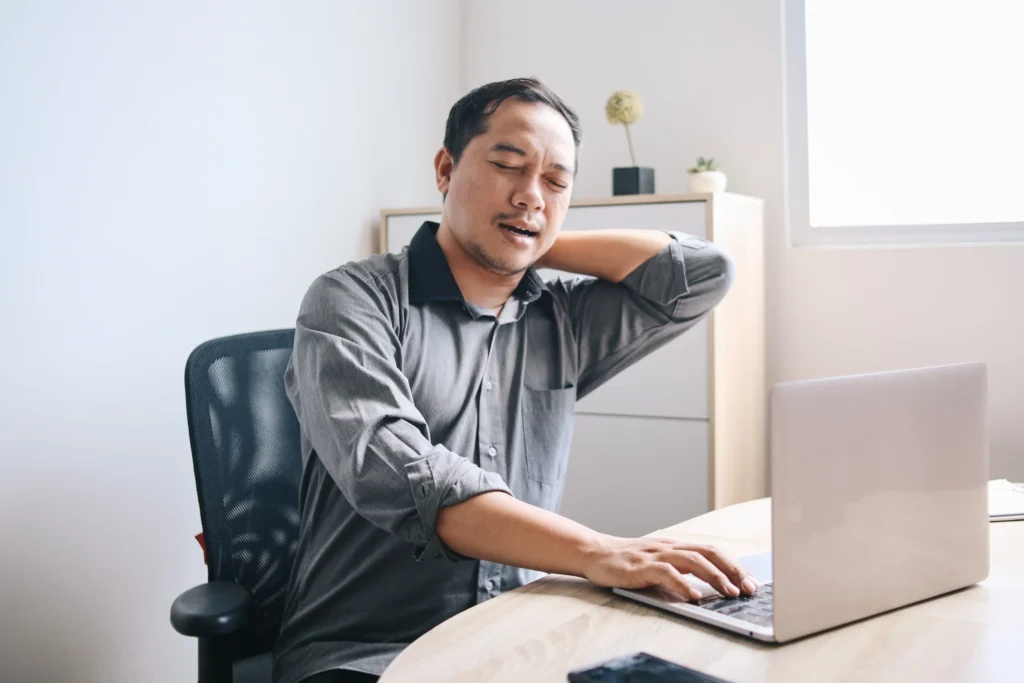
Postural cervical pain is the most common cause of cervical spine pain in working-age adults and the most preventable. Addressing postural cervical pain properly by correcting the sitting posture, changing the workstation, and building muscle to sustain a better position is not only treatment but prevention of pain from years of unaddressed stress.
Symptoms of Cervical Spine Pain
Different structures in the cervical spine produce different symptom patterns, and knowing what to look for helps identify what needs treatment.
- Neck pain and stiffness without symptoms travelling into the arm is the most common presentation. It is usually linked to muscle tension, joint irritation, or early disc involvement.
- Pain into the shoulder and upper arm without any numbness, tingling, or weakness often comes from a facet joint or disc rather than the shoulder itself. This is one of the most common reasons cervical spine problems are mistaken for shoulder problems.
- Arm pain with numbness or tingling is the clearest sign that a nerve is involved. Where the symptoms travel into the arm and hand points to which level of the cervical spine is affected. The neck should always be assessed when these symptoms are present, even if neck pain is minor or absent.
- Headaches starting at the base of the skull that spread forward toward the eye or temple on the same side can come from the upper cervical spine. These headaches are often worse with neck movement or prolonged sitting and are regularly mistaken for tension headaches or migraines.
- Weakness in the arm or hand such as difficulty gripping or dropping objects, is a more serious sign that a nerve is significantly compressed. This warrants prompt professional assessment.
If you have symptoms in both arms, progressive weakness in the arms or legs, difficulty with balance or fine motor tasks, or any changes to bladder or bowel function alongside neck pain, seek assessment urgently. These signs suggest the spinal cord may be involved, which requires medical attention.
How Physiotherapy Treats Cervical Spine Pain
Finding out which structure is causing the pain is the most important first step. A cervical spine assessment covers nerve testing of the arms, range of motion, posture, and specific tests to see which parts are the real cause of the issue. This decides the treatment because a disc herniation with nerve involvement is treated differently from a facet joint problem, which is treated differently from postural neck pain.
Manual Therapy
Hands-on joint mobilisation of the cervical and thoracic spine reduces pain, eases muscle tension, and restores normal joint movement. The mid-back is treated alongside the neck because stiffness there forces the neck to overwork, increasing load on the cervical joints.
Soft tissue release targets the muscles that tighten in response to pain such as the upper trapezius, levator scapulae, and scalenes, reducing the secondary tension that makes movement painful even when the underlying structure is starting to settle.
Exercise Rehabilitation
Deep neck flexor activation is the most important exercise. These muscles at the front of the neck provide stability and control but are consistently weak in people with ongoing neck pain.
Cervical strengthening builds the capacity of the neck muscles to support the spine through daily demands. Isometric exercises like pressing gently against the hand in different directions without allowing movement are used early and progress to more dynamic resistance exercises as pain settles.
Nerve Pain Management
When a nerve root is involved, gentle mobilisation techniques performed within comfortable limits reduce nerve sensitivity and restore normal movement through the surrounding tissues. In the acute phase, positions that most provoke arm symptoms are temporarily modified.
Nerve symptoms resolve more slowly than mechanical pain. Most cases improve significantly within six to twelve weeks, though tingling and numbness often linger somewhat after pain has settled.
How Long Does Cervical Spine Pain Take to Resolve?
Recovery timelines vary depending on the condition, its severity, and how long it has been present. The following provides realistic guidance rather than best-case estimates.
| Condition | Timeline | Notes |
|---|---|---|
| Facet joint pain and cervical strain | 2–6 weeks | Responds well when managed early |
| Cervical disc herniation with nerve involvement | 6–12 weeks | Tingling and numbness may linger after pain settles. |
| Cervical spondylosis | Long-term management | Structural changes do not reverse. Goal is managing symptoms and maintaining function |
| Postural cervical pain | Fast initial response | Requires lasting changes to sitting habits to stay resolved |
| Cervical stenosis with spinal cord involvement | Requires medical assessment | Surgery may be needed since it sits outside the standard physiotherapy timeline |
Get Cervical Spine Pain Treatment at Regenesis Physiotherapy

The difference between correctly identified and correctly treated cervical spine pain and a general approach is typically the difference between a recovery that progresses steadily and one that stalls, comes back, or slowly gets worse.
At Regenesis Physiotherapy, our specialists will assess which structures are involved in your cervical spine pain, what is driving your specific symptoms, and what treatment approach is appropriate for your presentation. You will leave with a clear understanding of your condition and a rehabilitation plan built around resolving it properly.