

It might start as a dull ache after a long day on the laptop, a sharp twinge when you push yourself up from the floor, or a stiffness that greets you every morning when you pick up the kettle. However it shows, wrist pain has a way of getting into almost everything you do, because your hands are involved in almost everything you do.
The good news is that most wrist pain is manageable once you know what is behind it.
In this guide, our physiotherapists in Subang Jaya walk you through the most common wrist pain causes, what you can do at home, and how wrist pain treatment with physiotherapy works when home care is not enough.
Why the Wrist Joint Is Prone to Pain
The wrist is not one joint but a cluster of them. Eight small carpal bones sit between the two forearm bones (the radius and ulna) and the bones of the hand, held together by a web of ligaments. Tendons from the forearm muscles pass over the top and underside of the wrist on their way to the fingers and thumb.
This design gives the wrist a remarkable range of movement. It bends, extends, tilts side to side and rotates with the forearm. The trade-off is that there are many small structures packed into a tight space, and each one can become irritated, strained or compressed.
That is why two people who both say “my wrist hurts” can have completely different problems. Where the pain sits, what movements trigger it and how it started are the best clues to the cause.
Common Wrist Pain Causes
Wrist pain causes generally fall into two groups: a sudden injury, or a gradual problem that builds from repeated use, posture or wear. Here are the conditions we see most often at our clinic.
Wrist Sprain
A sprain happens when the ligaments holding the wrist bones together are overstretched or partly torn. The classic cause is falling onto an outstretched hand, whether on a badminton court, a wet floor or a futsal pitch. Expect pain, swelling, bruising and difficulty gripping. Mild sprains often settle in a few weeks, but a sprain that is left to “heal on its own” without restoring strength can leave the wrist feeling weak and prone to giving way.
Tendinitis and De Quervain's Tenosynovitis

Tendinitis is irritation of the tendons that move the wrist and fingers, usually from repeating the same motion over and over. A specific type called De Quervain’s tenosynovitis affects the tendons on the thumb side of the wrist, causing pain when you grip, pinch, twist a jar lid or lift something with your thumbs pointing up. According to the American Academy of Orthopaedic Surgeons, it is more common in women, in people in their 40s and 50s, and in new mothers in the weeks after giving birth, when lifting a baby repeatedly loads the thumb.
Carpal Tunnel Syndrome
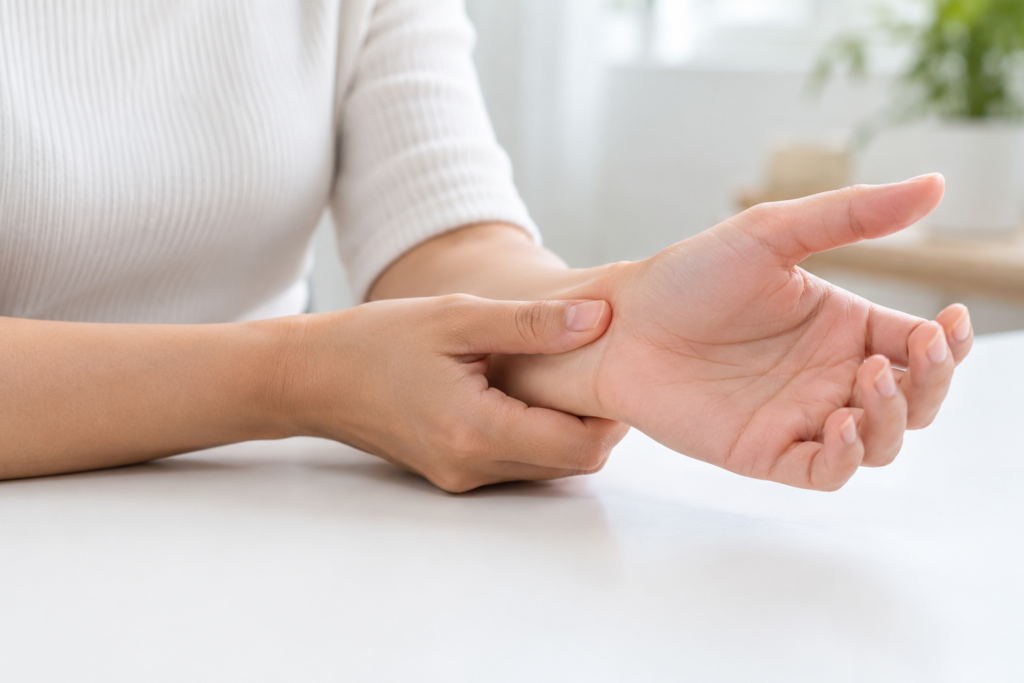
The carpal tunnel is a narrow passage on the palm side of the wrist that the median nerve runs through. When the tunnel becomes crowded, the nerve is squeezed. The tell-tale signs are tingling, numbness or pins and needles in the thumb, index and middle fingers, an ache that is often worse at night, and a weak grip that makes you drop things. Long hours of typing, phone use and gripping tools are common contributors.
Repetitive Strain and Overuse
Not every sore wrist has a neat diagnosis. Many office workers, gamers, hairdressers, mechanics and gym-goers develop a general ache from loading the wrist the same way for hours, often in a bent position. Push-ups, planks and bench pressing with the wrist cranked backwards are frequent culprits in the gym. Left alone, this kind of overuse can progress into tendinitis.
TFCC Injury (Pain on the Little Finger Side)
The triangular fibrocartilage complex, or TFCC, is a cushion of cartilage and ligaments on the little finger side of the wrist. It can be injured in a fall or worn down by repeated twisting, as in racquet sports, golf or using a screwdriver. Pain on the outer edge of the wrist, clicking, and discomfort when turning a doorknob or pushing up from a chair are typical signs.
Ganglion Cyst
A ganglion cyst is a smooth, fluid-filled lump that usually appears on the back of the wrist. Many are painless, but some press on nearby tissue and cause an ache, especially when the wrist is bent back. They are not cancerous and sometimes shrink on their own, but any new lump is worth having checked.
Arthritis
Osteoarthritis develops as the cartilage in a joint wears down over time, often at the base of the thumb or after an old wrist fracture. Rheumatoid arthritis is an autoimmune condition that often affects both wrists at once, with warmth, swelling and morning stiffness that lasts longer than half an hour. Both cause wrist joint pain that tends to come and go in flare-ups.
Fracture
A broken wrist, most often the end of the radius or the small scaphoid bone, usually follows a fall onto the hand. A scaphoid fracture is easy to mistake for a sprain because there may be little swelling, just deep pain at the base of the thumb. If you hear a snap or the wrist looks out of shape, get it X-rayed before anything else.
How to Ease Wrist Pain at Home
For mild pain with no sign of a fracture, these steps can help settle things down in the first week or two. They follow the self-care advice given by the NHS for wrist pain.
Rest the Wrist, but Do Not Freeze It
Cut back on whatever sets the pain off, whether that is typing marathons, heavy lifting or push-ups. Resting does not mean keeping the wrist completely still, though. Gentle movement within a comfortable range helps prevent stiffness and keeps blood flowing to the healing tissue.
Use Ice in the First Few Days
Wrap an ice pack or a bag of frozen peas in a thin towel and hold it on the sore area for up to 20 minutes, every two to three hours. Avoid heat packs and hot showers on the wrist for the first two to three days after an injury, as heat can increase swelling. For long-standing stiffness without swelling, warmth often feels better.
Support It with a Splint

A wrist splint from the pharmacy keeps the joint in a neutral position, which takes pressure off irritated tendons and the median nerve. Wearing one at night is especially helpful for carpal tunnel symptoms, since many people sleep with their wrists curled. Use it as a short-term support, not a permanent fix, as relying on it for weeks can weaken the muscles around the wrist.
Adjust How You Work and Train
Small changes add up. Keep your wrists straight and level when typing, with the keyboard at elbow height. Take a short break every 30 to 45 minutes to shake out your hands. In the gym, try push-ups on your knuckles or on parallettes, or hold dumbbells to keep the wrist straight. If you also feel your neck and shoulders tightening at the desk, our article on neck pain from screen time covers the full workstation setup.
Consider Simple Pain Relief
Over-the-counter pain relief such as paracetamol, or an anti-inflammatory gel applied to the wrist, may take the edge off while you recover. Check with a pharmacist first if you have other health conditions or take regular medication.
If the pain has not improved after two weeks of home care, it is a sign that something more specific is going on and needs a proper assessment.
Gentle Exercises to Relieve Wrist Joint Pain
Once the initial flare has calmed, gentle movement helps restore range and confidence in the wrist. Mild discomfort, around two or three out of ten, is generally fine. Stop if you feel sharp pain, numbness that spreads, or pain that is worse the next day. Skip these entirely if you suspect a fracture.
Accurate assessment identifies the specific cause of the sciatica, the nerve root level involved, the direction of preference that determines which exercises are appropriate, and the contributing factors that need to be addressed alongside symptom management.
Wrist Flexion and Extension

Rest your forearm on a table with your hand hanging off the edge, palm down. Slowly lift the back of your hand towards the ceiling, then lower it towards the floor. Move only as far as is comfortable. Repeat ten times, then turn your palm up and repeat.
Prayer Stretch

Press your palms together in front of your chest, fingers pointing up. Slowly lower your hands towards your waist while keeping the palms together, until you feel a gentle stretch on the underside of the wrists. Hold for 15 to 30 seconds and repeat three times.
Tendon Glides
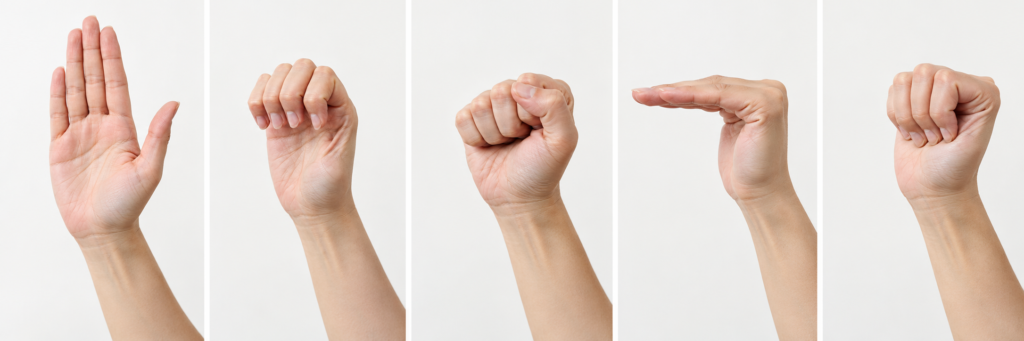
Start with your fingers straight. Bend them into a hook, then a full fist, then a flat fist with the fingertips touching the base of the palm, returning straight between each. Moving through these shapes helps the tendons slide smoothly through the wrist and is often used for carpal tunnel symptoms. Do five rounds, two or three times a day.
Grip Squeeze
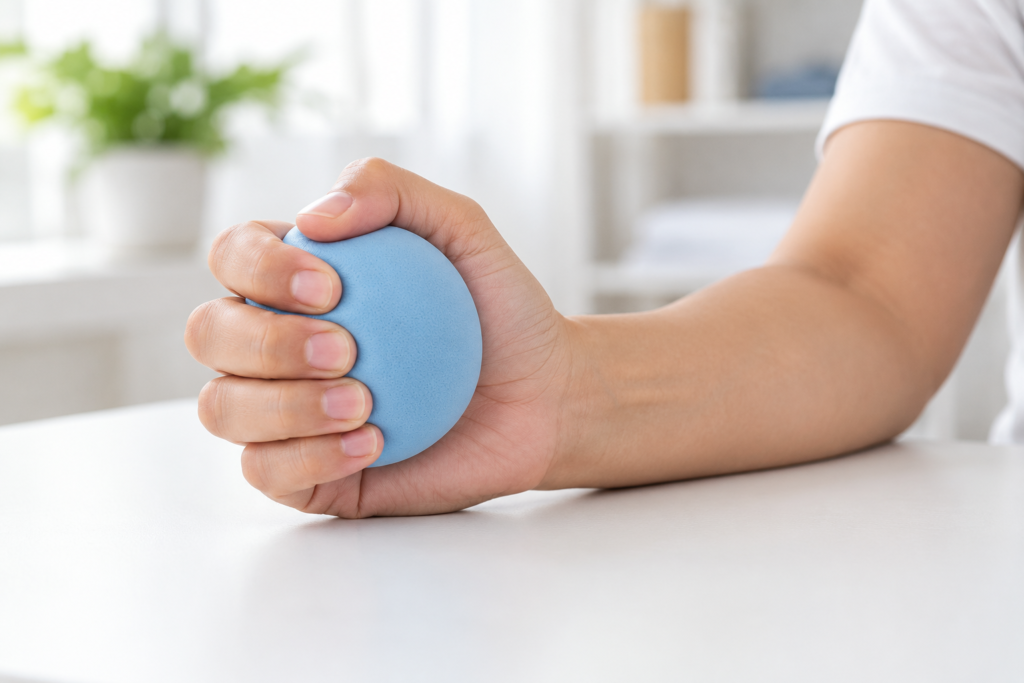
Squeeze a soft ball or rolled-up towel for five seconds, then relax. Repeat ten times. This rebuilds grip strength after a sprain or a period of rest, but leaves it out while pain is still sharp.
Forearm Rotation
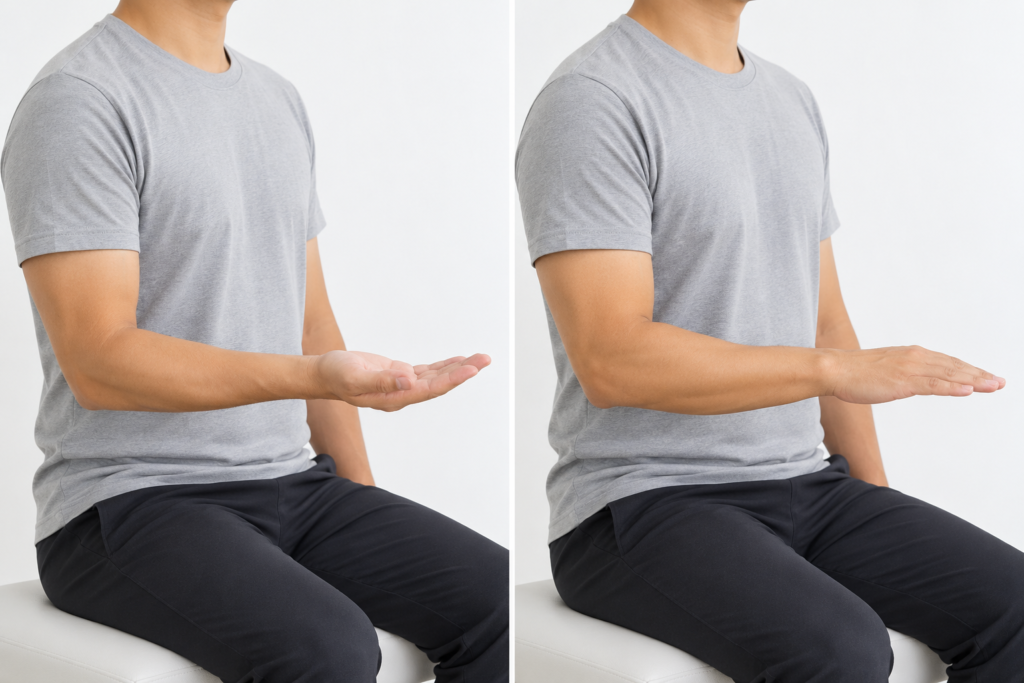
Tuck your elbow into your side, bent at 90 degrees, holding a light object such as a water bottle. Slowly turn your palm up to the ceiling, then down to the floor. Repeat ten times. This works the muscles that control twisting, which is useful for TFCC and tennis-related wrist pain.
These exercises are a general starting point. Your physiotherapist can tailor the type and progression to your specific condition, which matters because the right exercise for a sprain can aggravate De Quervain’s, and vice versa.
Wrist Pain Treatment with Physiotherapy
When home care is not enough, physiotherapy works on the cause of the pain rather than only the symptoms. Treatment is built around your diagnosis, your job and the activities you want to get back to.
A Proper Assessment First
Your physiotherapist will ask how the pain started, which movements set it off and what your daily routine looks like. They will then test the wrist’s movement, strength and specific structures, such as the thumb tendons, the TFCC and the median nerve. Because wrist and hand symptoms can sometimes come from the neck or elbow, these areas are usually checked too. If a fracture or something that needs a doctor is suspected, you will be referred for imaging or a medical review.
Manual Therapy

Hands-on techniques such as joint mobilisation and soft tissue release help ease stiffness in the small carpal joints and relax tight forearm muscles that pull on the wrist. Many patients notice easier movement after these sessions, which makes the exercise part of rehab more comfortable. Learn more about our manual therapy approach.
Dry Needling

Tight, sensitive knots in the forearm muscles can feed into wrist pain, particularly in people who grip, type or lift a lot. Dry needling uses fine needles to release these trigger points and is typically combined with exercise rather than used on its own.
Progressive Strengthening
This is the part that helps stop the pain from coming back. Exercises start gently and build up gradually, targeting grip, wrist and forearm strength so the tendons and ligaments can handle the loads of daily life, work or sport again.
Taping, Splinting and Workstation Advice
Kinesio or rigid taping can support the wrist while you return to activity, and your physiotherapist can advise on whether and when to use a splint. You will also get practical advice on keyboard and mouse setup, lifting technique, and how to modify your training while you recover.
Getting Back to Sport or Work
For athletes and active people, our sports physiotherapy programme reintroduces sport-specific movements, such as badminton smashes, climbing grips or loaded push-ups, in a controlled way. If your wrist pain is linked to your job, our work injuries service focuses on getting you back to your tasks safely. For more general advice on looking after sore joints, read our physiotherapist’s tips for joint pain recovery.
When Wrist Pain Needs Urgent Attention
Most wrist pain is not an emergency, but some signs point to a fracture, infection or nerve problem that should be seen quickly.
Go to a Doctor or Emergency Department Straight Away If
You hear a snap, grinding or popping sound when you hurt it, the wrist has changed shape or colour, or you cannot move it or hold anything. The same applies if the pain is severe, you feel faint or sick from it, the wrist is hot and red, or you have lost feeling in part or all of your hand.
Book an Assessment If
The pain is stopping you from doing normal activities, has not improved after two weeks of home care, keeps coming back, or comes with tingling and numbness. People with diabetes should get hand and wrist problems checked early, as they can be more serious.
Frequently Asked Questions About Wrist Pain
It depends on the cause. A mild sprain or overuse strain often improves within two to six weeks with the right care. Tendon problems such as De Quervain's can take longer, and conditions like arthritis are managed over time rather than cured. If there is no improvement after two weeks, get it assessed.
Use ice for the first two to three days after an injury or when the wrist is swollen, for up to 20 minutes at a time. Heat is better suited to long-standing stiffness without swelling, such as morning stiffness from arthritis.
Usually yes, with changes. Avoid movements that cause sharp pain, such as push-ups on flat palms or heavy gripping, and keep training the rest of the body. Gentle, pain-free wrist movement generally helps recovery more than complete rest.
Sometimes. Irritated nerves in the neck can cause pain, tingling or weakness that is felt in the wrist and hand. This is one reason a physiotherapist checks the neck and elbow as part of a wrist assessment.
In most cases you can book an assessment directly, but some insurers require a referral for claims, so check with your provider or with us first. If your physiotherapist suspects a fracture or a condition that needs medical care, they will refer you to a doctor.
Get Wrist Pain Treatment at Regenesis Physiotherapy

Wrist joint pain has many possible causes, and the right treatment depends on finding the one behind yours. At Regenesis Physiotherapy in Sunway Geo Avenue, Subang Jaya, our physiotherapists will assess your wrist, explain what is going on in plain language and build a plan that fits your work, training and daily life. Whether it is a fresh sprain, a thumb that aches every time you lift your baby, or numb fingers that wake you at night, you will leave with a clear next step.
We are open 9am to 8pm, Monday to Sunday, and also offer home visits across the Klang Valley.