Tailbone pain is easy to dismiss. If you’ve noticed that sitting for any length of time reliably produces pain at the very base of your spine and that standing up afterwards brings a sharp, unpleasant feeling, then something isn’t right.
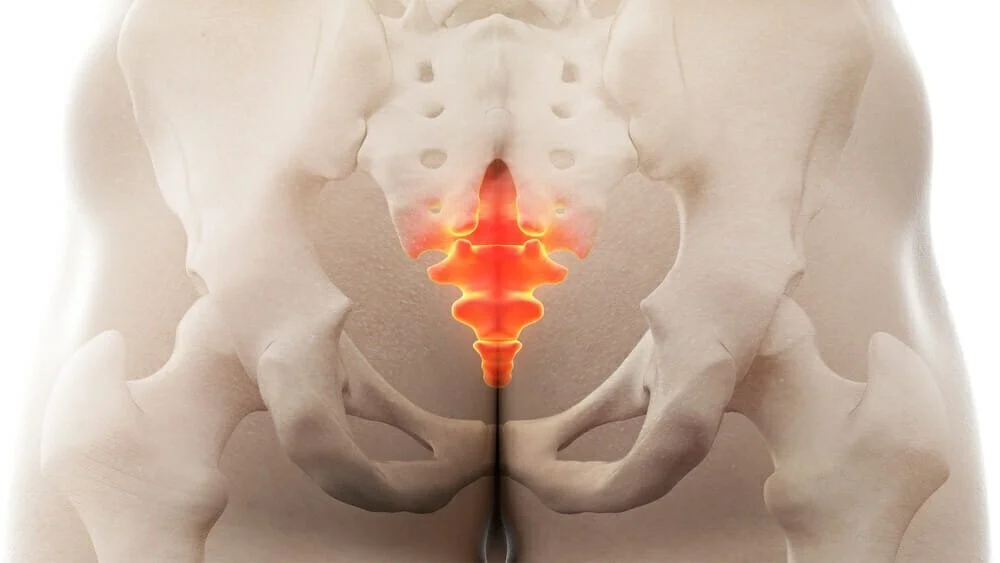
The tailbone, or coccyx, is a small triangular bone sitting at the bottom of your spine. When it starts to hurt, the discomfort can affect how long you can sit at a desk, whether you can drive comfortably, and even how well you sleep. Tailbone pain that persists or keeps returning isn’t something to simply push through. It has specific, identifiable causes, and physiotherapy addresses them effectively without relying on medication or surgery.
What Is Tailbone Pain and Why Does Sitting Make It Worse?
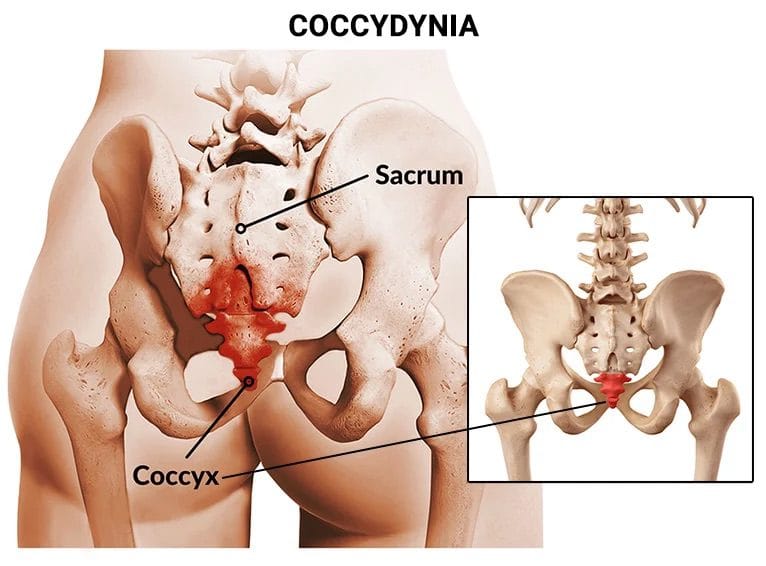
The coccyx is formed from three to five small fused vertebrae at the base of the spine. It serves as an attachment point for several muscles, tendons, and ligaments including parts of the pelvic floor and the gluteus maximus.
When you sit, particularly in a slouched or reclined position, a significant portion of your body weight shifts onto the coccyx rather than being distributed evenly through the sitting bones. For most people in most situations, this isn’t a problem. But when the coccyx is injured, inflamed, or being chronically irritated by poor sitting mechanics, that sustained pressure becomes a source of real pain.
Tailbone pain falls into two broad categories:
- Acute coccydynia follows a specific incident, most commonly a fall directly onto the tailbone, and the onset of pain is immediate and clearly linked to that event.
- Chronic coccydynia develops more gradually, often without a single obvious cause, building over time from repeated pressure, poor posture, or unresolved muscle tension in the surrounding area.
Certain groups are more commonly affected. Office workers and people in desk-heavy roles accumulate hours of sustained coccygeal pressure daily. Cyclists experience repetitive loading through the saddle. People who have recently given birth may have sustained a coccyx injury during delivery. And anyone who has taken a hard fall onto a hard surface like a slip on ice, or a fall down the stairs, is at risk of acute tailbone injury.
Common Causes of Tailbone Pain After Sitting
Understanding what’s driving tailbone pain matters because different causes respond to different treatment approaches. In many cases, more than one factor is at play simultaneously.
Direct trauma is the most immediately obvious cause. A fall onto a hard surface can bruise, dislocate, or in some cases fracture the coccyx. The pain is immediate, sitting becomes acutely uncomfortable, and the injury typically takes weeks to months to settle depending on severity.
Repetitive strain from prolonged sitting on hard or poorly supportive surfaces gradually irritates the coccyx and surrounding tissue. This is common in people who sit for eight or more hours a day, particularly on firm chairs without adequate cushioning, or in cyclists who spend long hours in the saddle. The damage accumulates slowly, which is why many people can’t pinpoint when the pain started.
Childbirth can push the coccyx outward as the baby passes through the birth canal. In some cases the coccyx sustains a partial dislocation or fracture during delivery, and post-natal tailbone pain is more common than is widely recognised. It’s frequently attributed to general post-birth recovery rather than identified as a specific coccyx injury, which means it often goes untreated.
Poor sitting posture is one of the most common and most correctable contributors. When you habitually sit in a rounded, slouched position, your pelvis tilts backward and your weight transfers from the sitting bones onto the coccyx. Maintain this posture for hours every day and the cumulative load on the tailbone becomes significant.
Hypermobility or hypomobility of the coccyx refers to too much or too little movement at the joint between the sacrum and the coccyx. Both can cause pain, though they require different treatment approaches. Hypermobility means the joint moves excessively under load, creating instability and irritation. Hypomobility means the joint is restricted, causing abnormal stress during movement. Identifying which is present requires proper assessment.
Tight pelvic floor and surrounding muscles are a frequently overlooked driver of tailbone pain. The muscles of the pelvic floor and deep gluteal region attach near the coccyx. When these muscles are tight or in spasm which can result from prolonged sitting, stress, previous injury, or post-natal changes. They create tension that refers pain directly into the tailbone area and keeps it chronically irritated.
Referred pain adds another layer of complexity. In some cases, the coccyx itself is structurally fine but pain is being referred into the area from the sacrum, the lower lumbar spine, or the pelvic floor. Treating the coccyx directly in these cases will achieve nothing; the source needs to be identified and addressed.
Signs and Symptoms of Tailbone Pain
Tailbone pain has a fairly distinctive profile, though it overlaps with some other conditions that affect the lower back and pelvis.
The most consistent feature is tenderness directly over the tailbone. This area is often noticeably tender to touch or pressure, and the pain is localised enough that most people can point to it precisely.
Pain that worsens after prolonged sitting is the defining complaint. Hard or unsupportive surfaces make it worse. Some people find they can sit comfortably for 20 or 30 minutes before pain begins to build; others notice discomfort almost immediately on certain surfaces.
The transition from sitting to standing is often the sharpest, most uncomfortable moment. The shift in weight and position as you rise puts a brief but significant load on the coccyx, producing a sharp pain that eases once you’ve been standing for a moment and the pressure has been redistributed.
Other recognisable signs include:
- Pain when leaning back while seated, which shifts weight directly onto the tailbone
- Discomfort during or after activities that load the coccyx: cycling, rowing, horse riding
- Pain or discomfort during bowel movements, when the muscles around the coccyx contract and shift
- Discomfort during sexual intercourse, particularly in women, due to the proximity of the coccyx to the pelvic floor
- A dull aching that refers into the lower back, hips, or down the back of the thigh — often causing people to attribute the problem to their back or hip rather than the coccyx
It’s worth distinguishing tailbone pain from other conditions with overlapping symptoms. Lower back pain typically sits higher up the spine and is more affected by bending and lifting than by sitting position. Sciatica involves radiating pain and neurological symptoms that run down the leg. Piriformis syndrome causes deep buttock pain that may radiate into the thigh but doesn’t produce the localised coccyx tenderness characteristic of coccydynia.
If tailbone pain is accompanied by numbness or tingling in the legs, changes to bladder or bowel function, or unexplained weight loss, seek professional assessment promptly rather than managing it independently. These combinations of symptoms may indicate something requiring more urgent investigation.
Tailbone Pain Treatment with Physiotherapy
Rest and over-the-counter pain relief are often the first things people try for tailbone pain, and while they can take the edge off acutely, they don’t address what’s causing the problem. Physiotherapy takes a more complete approach to relieve symptoms while correcting the underlying causes so the pain doesn’t keep returning.

Postural Assessment and Correction
Because poor sitting mechanics are one of the primary drivers of tailbone pain, understanding how you currently sit and what needs to change is a foundational part of treatment.
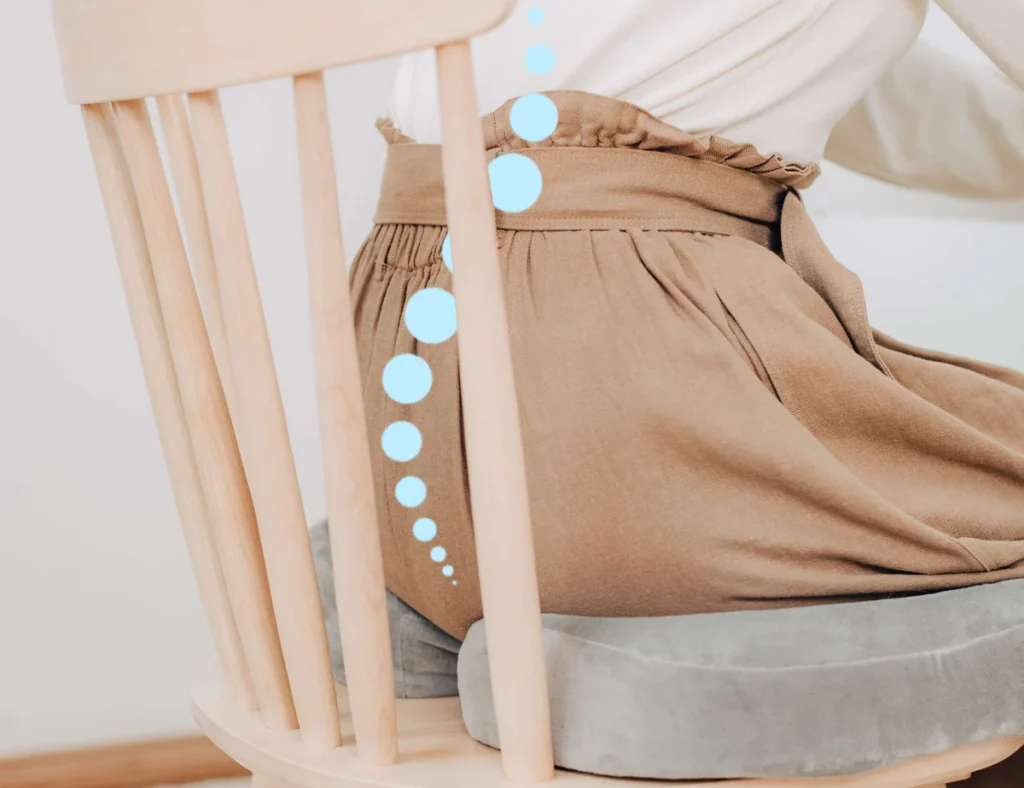
The goal is to shift weight-bearing away from the coccyx and onto the sitting bones — the bony prominences you can feel beneath your buttocks when seated properly. Achieving this requires a degree of anterior pelvic tilt: a gentle forward tipping of the pelvis that maintains the lumbar curve rather than flattening it. For people who have spent years sitting in a rounded, slouched position, this adjustment takes conscious effort and practice before it becomes natural.
Your physiotherapist will assess your sitting posture and workstation setup and make specific recommendations. A coccyx cushion, a seat pad with a cut-out or depression at the rear, can be a useful tool during recovery by removing direct contact pressure from the tailbone. It’s not a long-term solution on its own, but it makes sitting more manageable while other aspects of treatment progress.
Practical modifications extend beyond the desk. How you sit in your car, how you manage long flights or travel, and how you position yourself on surfaces like sofas and stadium seating all contribute to cumulative coccygeal load throughout the day.
Manual Therapy
Hands-on treatment is often the most immediately effective component of physiotherapy for tailbone pain, particularly in cases involving muscle tension, joint restriction, or post-traumatic stiffness.
Soft tissue release targeting the muscles around the coccyx such as the deep gluteal muscles, piriformis, and the pelvic floor, reduces the tension that is pulling on and compressing the tailbone. These muscles are rarely addressed through stretching alone; direct manual therapy achieves results that self-treatment cannot.
In cases where the sacrococcygeal joint is restricted or stiff, joint mobilisation can restore normal movement and significantly reduce pain. For appropriate cases, internal coccyx mobilisation which is a specialist technique performed can directly address restrictions and malalignments of the coccyx that are not accessible from the outside. This technique is particularly relevant for chronic cases and post-natal tailbone injuries, and is performed by a physiotherapist with specific training in pelvic health.
Strengthening and Stabilisation
Weakness in the muscles surrounding the coccyx leaves it poorly supported and more vulnerable to the stresses of sitting, movement, and impact. Rebuilding this support is a central part of ensuring recovery holds and recurrence is prevented.
The glutes play a key role. Strong gluteal muscles cushion the coccyx, absorb impact, and support the pelvis during movement. When they are weak, more of that load falls directly on the tailbone. Glute bridging and clamshell exercises are typically introduced early in rehabilitation, chosen because they strengthen the glutes effectively without placing direct load on the coccyx.
Pelvic floor rehabilitation is often an important component, particularly for post-natal cases or those where pelvic floor tension has been identified as a contributing factor. Pelvic floor work for coccydynia isn’t always about strengthening. In cases where the pelvic floor is hypertonic (overly tight), learning to release and lengthen these muscles is the priority.
Deep core activation supports spinal and pelvic stability more broadly, reducing the overall load that the coccyx has to manage during daily activity. As rehabilitation progresses, exercises become more functional by building strength in the positions and movements that matter most for your daily life and activity.
Movement and Load Management
Recovery is about how you manage the activities that are repeatedly loading the coccyx between sessions.
For cyclists, this might involve a bike fit assessment to review saddle height, saddle type, and riding position, all of which significantly affect how much pressure is transmitted through the coccyx. Return to cycling is gradual, with duration and intensity built up carefully as pain settles.
For people in desk-based roles, managing sitting load during recovery requires practical strategies: taking regular standing or walking breaks, using a coccyx cushion, and adjusting sitting posture consistently rather than intermittently. Sitting for eight hours a day while also trying to rehabilitate a coccyx injury is a significant challenge, and your physiotherapist will help you find an approach that makes recovery possible.
How Long Does Tailbone Pain Take to Resolve?
Recovery timelines vary depending on the nature and duration of the injury, but most people see meaningful progress within a reasonable timeframe when treatment is consistent and appropriate.
Acute tailbone injuries typically respond well within four to eight weeks of physiotherapy. Pain settles progressively as swelling resolves, manual therapy addresses the immediate tissue irritation, and postural and strengthening work begins.
Chronic coccydynia that has been present for months or years takes longer to resolve, but it still responds well to proper treatment. The key difference is that chronic cases often involve more ingrained postural habits, more established muscle tension patterns, and sometimes structural changes to the coccyx itself.
Several factors affect how quickly recovery progresses. The most significant is whether the cause is still active. If you spend eight hours a day sitting on a hard chair in a position that loads the coccyx, and you haven’t changed this during treatment, recovery will be slow regardless of how well the physiotherapy sessions go.
Tailbone pain has a tendency to recur in people who recover and then return to exactly the same sitting habits and movement patterns that caused the problem in the first place. The people who stay pain-free long-term are those who maintain the postural awareness and muscle strength developed during rehabilitation.
FAQ on Tailbone Pain
You can't reliably tell from symptoms alone because a bruised coccyx, a fractured coccyx, and a dislocated coccyx can all feel similarly painful. An X-ray is required to identify a fracture or dislocation.
That said, treatment for all three is largely the same in most cases: pain management, offloading pressure from the coccyx, and physiotherapy rehabilitation. Surgery is very rarely required even for fractures, as the coccyx heals well with conservative management.
Acute tailbone pain from a minor injury often improves over several weeks without formal treatment, provided the aggravating cause is reduced. However, pain that has persisted beyond six to eight weeks, recurs repeatedly, or is interfering significantly with daily life is unlikely to resolve without addressing the underlying causes. Waiting it out risks the condition becoming more chronic and harder to treat.
Yes, as a short-term aid during recovery. A coccyx cushion with a cut-out at the rear removes direct pressure from the tailbone when sitting, making daily activities more manageable while rehabilitation progresses. It's not a solution in itself but it significantly improves comfort during recovery and is a worthwhile investment.
Yes. Post-natal tailbone pain is frequently under-recognised and under-treated, with many women assuming it's a normal part of post-natal recovery. A physiotherapist with pelvic health experience can assess the coccyx directly, address any joint restriction or malalignment, treat pelvic floor tension that is contributing to pain, and guide rehabilitation in a way that accounts for the demands of new motherhood.
The transition from sitting to standing briefly places a concentrated load on the coccyx as weight shifts and the surrounding muscles engage to lift you upright. If the coccyx is inflamed, restricted, or the surrounding muscles are tight, this moment of transition provokes a sharp response. It typically eases within a few steps once weight is distributed normally through the legs.
Get Tailbone Pain Treatment at Regenesis Physiotherapy

Tailbone pain that keeps returning after sitting isn’t something to manage indefinitely with cushions and painkillers. With the right physiotherapy approach, the cause can be identified and treated, and most people recover fully and stay that way.
At Regenesis Physiotherapy, our specialists will assess your coccyx, your sitting mechanics, and the surrounding muscle and joint function to understand exactly what’s driving your pain. You’ll leave with a treatment plan that addresses the problem properly, practical strategies for managing your daily routine during recovery, and the tools to prevent it from coming back.