
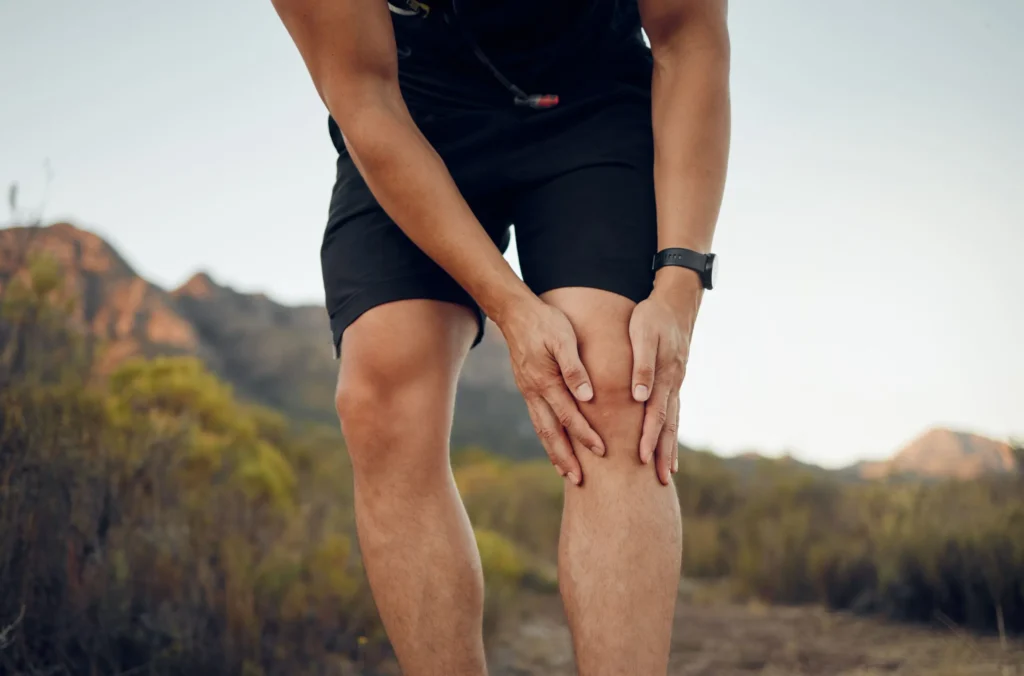
Runner’s knee, or patellofemoral pain syndrome, affects up to 50% of recreational runners. But it’s almost entirely preventable with proper training, strength, and biomechanics.
Most runners discover prevention too late, treating pain after it develops instead of preventing it. Luckily, prevention is much easier than recovery, avoiding months of reduced training and frustration.
How Does Runner’s Knee Happen?
Runner’s knee is pain around the kneecap. And despite what people might assume, even if you get an x-ray, it wouldn’t show anything wrong with your bones. That’s because runner’s knee is caused by how you’re training and how your body moves.
The root causes break into three categories.
Muscle weakness
Weak glutes are responsible for 80% of runner’s knee cases. When your hip muscles are weak, your knees have to work extra hard to stabilize your body. A weak core means your trunk isn’t stable, forcing your knees to compensate which creates excessive stress on your kneecap.
Training mistakes
Training mistakes can include ramping up mileage too fast (jumping more than 10% per week), not taking enough recovery time between hard workouts, running in worn-out shoes that no longer cushion your feet properly and repeatedly running on sloped surfaces (like the shoulder of a road).
How you run
The way you run, or your gait, can be a big contributor to the stress on your knee.
- Overstriding: landing with your foot too far in front, creating impact shock
- Overpronation: your foot rolls inward too much with each step
- Poor running form that gets worse when your muscles are tired or weak
Runner's Knee Symptoms
Runner’s knee usually starts small and gets worse if you ignore it. Here’s what to pay attention to:
Early warning signs
- Pain around your kneecap, especially when running downhill or down stairs
- A dull ache that appears during or right after your run
- Knee pain that goes away with rest but comes back when you run again
- Stiffness in your knee after sitting for a while
More noticeable symptoms
- Sharp pain around the kneecap that limits how far you can run
- Swelling or puffiness around your knee
- A feeling that your knee might give out or buckle (though this is less common)
- Pain getting worse despite taking a few days off
Most runners feel a twinge or slight ache and keep running through it, hoping it goes away. But when you feel pain that doesn’t improve after a week of rest, severe enough to change how you walk and swelling that doesn’t go down within a few hours of icing, that’s when you have to take it seriously.
How Can You Tell If You’re Running Wrong?
Before you can take steps to prevent it, learning the damaging habits you have when you’re running and correcting them can ensure any pain wouldn’t be able to repeat.
Here’s some ways you can check your gait and biomechanical risk.
Single-leg stance test: Stand on one leg while someone watches from behind. If your hip drops or trunk leans toward your stance side, you have hip weakness which is one of the primary risk factors for runner’s knee.
Single-leg squat test: Perform a single-leg squat. If your knee caves inward (valgus collapse), you have hip external rotator weakness, another cause of potential knee pain.
Video running analysis: Film yourself running from behind. Watch for: foot striking too far ahead, excessive hip drop, knees collapsing inward, or excessive trunk rotation. These patterns directly cause runner’s knee.
Flexibility assessment: Tight hip flexors, hamstrings, and calves alter running mechanics. Poor ankle mobility forces compensations at the knee. Identify tight areas before they cause problems.
Strength Training and Runner’s Knee Exercises
Strength train 2-3 times weekly on non-consecutive days to make your knee stronger and reduce the risk of injury. It doesn’t have to be intense since the knee exercises will work as long as you’re consistent.



Single-leg glute bridges
Lie on your back, one leg extended. Lift hips using glutes on your supporting leg. Do 3 sets of 12-15 reps each leg daily. Progress by holding 5-10 seconds at the top or adding weight.
Single-leg deadlifts
Stand on one leg, hinge at hips, lower your torso while extending your free leg back. Do 3 sets of 10-12 reps each leg. Progress by adding dumbbells.
Step-ups (high step)
Use a 12-18 inch step. Step up powerfully, drive the opposite knee up. Do 3 sets of 10-12 reps each leg. Progress by adding weights.
Monster walks
Band around legs (above knees and ankles). Walk forward with large steps. Do 3 sets of 15 steps, focusing on glute activation.
Clamshells
Lie on side, band around knees. Open top knee against resistance. Do 3 sets of 15 reps each side. Progress with heavier bands.
Quad and core work
Terminal knee extensions (3 x 15 reps each leg), planks (3 x 30-60 seconds), and dead bugs (3 x 10-12 each side) complete the foundation.
Tip: Pay attention to your cadence. Cadence is how many steps you take per minute. Aim for 170-180 steps per minute. If you’re taking fewer than 160 steps per minute, you’re likely taking steps that are too long. Use a metronome app on your phone to help you gradually increase your cadence over a few weeks.
Wearing the Right Shoe to Avoid Runner’s Knee
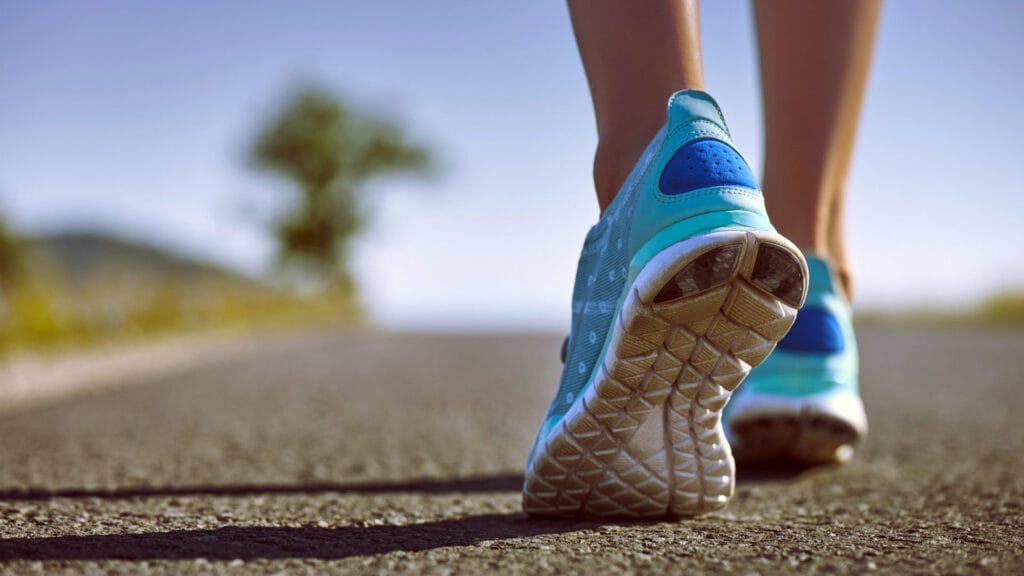
Buy shoes that match your running style
Not all running shoes are the same. Some are designed for neutral runners, some for people whose feet roll inward (overpronation), and some for high arches. If you’re not sure what type of shoe you need, visit a specialty running store where staff can watch you run and recommend the right shoe for your foot. Wearing the wrong shoe type makes knee pain more likely.
Rotate between two pairs of shoes
If possible, own two pairs of running shoes and alternate between them. This gives each pair time to decompress and recover between runs. It also means you won’t be stuck without shoes when one pair wears out. Plus, alternating shoes prevents your body from adapting too much to one specific shoe.
Mix up your running surfaces
Don’t run the same route on the same surface every single day. Variety matters. Run on roads some days, a track other days, and trails when you can. Different surfaces stress your knees slightly differently. By mixing it up throughout the week, you prevent the repetitive stress that leads to knee pain. Trails are especially good because the uneven surface forces your stabilizer muscles to work, which actually strengthens them.
Replace your shoes regularly
Running shoes wear out. The cushioning in the sole gets compressed over time, and your shoes stop protecting your knees properly. Most running shoes are good for about 480-800 kilometres before they lose their support. After that, they can actually contribute to knee pain. Keep track of your mileage, either write it down or use a running app and replace them when you’ve hit that threshold.
Get a Professional Gait Analysis with a Sports Physiotherapist
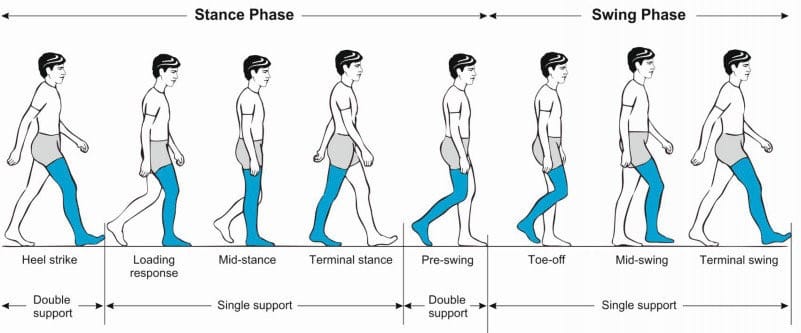
You can watch your own running video, but it’s hard to catch everything. A sports physiotherapist is trained to spot movement problems that you might miss. They know exactly what to look for, like hip alignment, knee tracking, arm swing, everything.
More importantly, they can tell you why your body is moving that way. A physiotherapist identifies the specific problem causing your poor form instead of just pointing out that something looks wrong.
Once a physiotherapist identifies your specific movement problems, they’ll explain which of your muscles are weak and causing the issues, then give you targeted exercises to fix those specific problems. Maybe your issue is weak glutes, so they focus your program on glute strengthening. Maybe it’s tight hip flexors limiting your stride, so they add specific hip stretches to your routine. Your plan is customized to your body’s actual needs.
FAQ on Runner’s Knee
Yes. Address the root causes that created initial pain, and prevent recurrence. Most runners who get knee pain once get it again without prevention.
Recovery time depends on how long you've had the pain. If you catch it early and start treatment right away, you might feel better in 2-4 weeks. If you've been running through pain for months, recovery can take 8-12 weeks. The longer you wait, the longer recovery takes.
Compression sleeves can provide some temporary relief and support while you're running, but they're not a cure. They won't fix the underlying muscle weakness causing your pain. Some runners find them useful for keeping their knee warm and supported during a run, but don't rely on them instead of addressing the actual problem.
A knee brace can provide support and stability while you're training, similar to a compression sleeve. Some runners find it helps them feel more confident while running. However, like compression sleeves, a brace isn't a fix. It's a tool you can use while you're doing the actual work of strengthening your muscles and correcting your form.
Runner's knee itself doesn't usually cause permanent damage if you treat it properly. However, if you ignore runner's knee for years and keep running through pain, you can develop compensation patterns that lead to other problems. You might damage your other knee, develop hip pain, or create chronic movement problems.
Overcome or Prevent Runner's Knee with Regenesis' Sports Physiotherapy
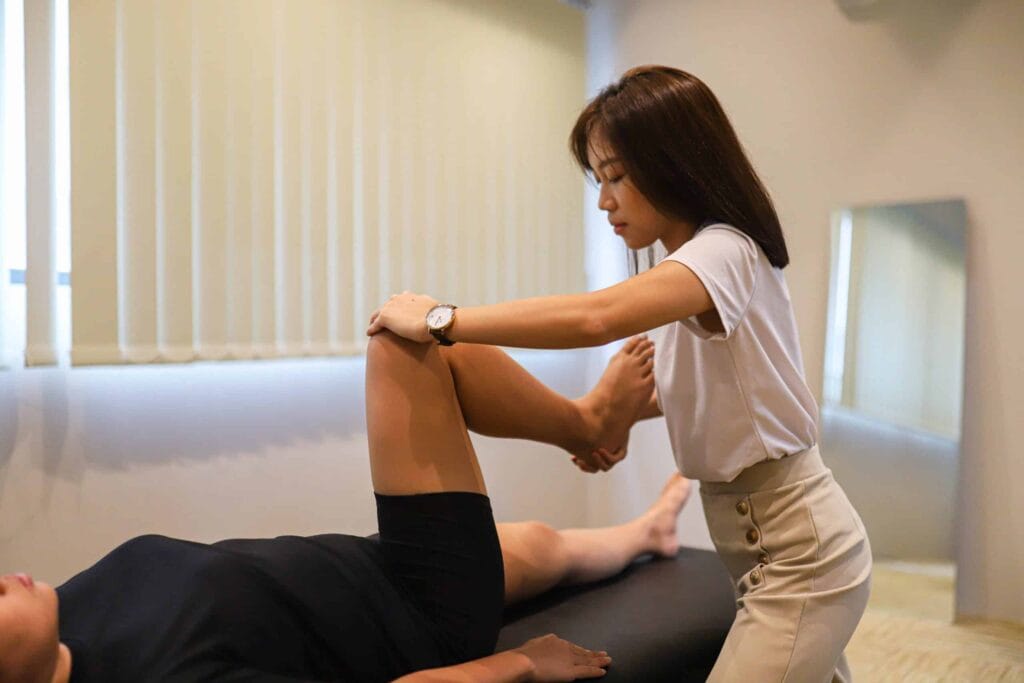
Whether you’re dealing with runner’s knee from ramping up mileage too quickly, weak glutes from sedentary training schedules, or poor running form from years of bad habits, a sports physiotherapist can identify your specific problem and fix it. At Regenesis Physiotherapy, our specialists do more than just treat your knee pain, they also create a training plan that gets you back to running stronger and injury-free.