
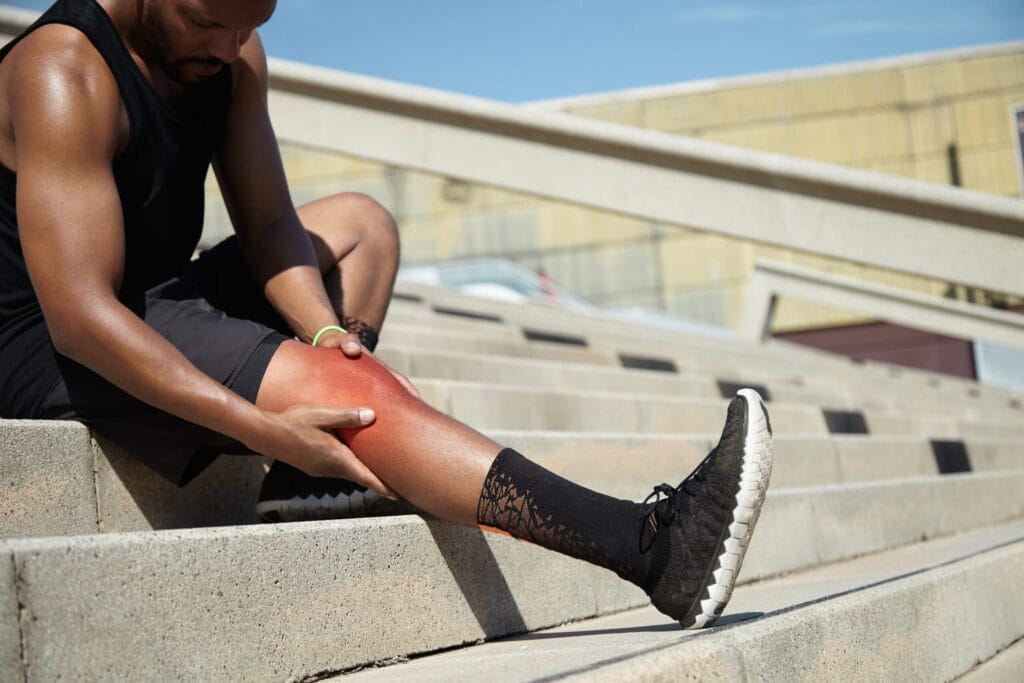
Most knee pain doesn’t require surgery, it requires the right exercises, done progressively, to address the underlying weakness or imbalance. People often rest completely or do exercises incorrectly, prolonging knee pain instead of resolving it. Targeted physiotherapy exercises address root causes like weak glutes, poor hip stability, and tight muscles that force your knee to compensate.
Strengthening Your Knee With Specific Exercises
Knee pain usually stems from weakness, not injury. Weak glutes and quadriceps force the knee to compensate. Poor hip stability creates abnormal knee tracking. Tight hamstrings and calves alter knee mechanics. Your knee muscles and ligaments become overworked trying to stabilize a joint without proper support.
Physiotherapy exercises address these root causes by strengthening weak muscles that support the knee, improving hip and ankle stability, correcting movement patterns, restoring range of motion, and building muscular endurance to prevent re-injury.
The progressive approach matters. Exercises progress through three stages: pain relief, mobility and basic strengthening, and advanced strengthening. Progressing too quickly causes re-injury; progressing too slowly prevents full recovery.
While mild discomfort during exercise is normal, sharp pain or pain that worsens after exercise means stop and modify. Exercise should reduce pain over time, not increase it. Do most exercises 2-3 times daily for 20-30 minutes total, with 1-2 rest days weekly.
Glute Activation Exercises

Glute bridges
Lie on your back with knees bent and feet flat. Tighten your glutes and lift your hips toward the ceiling. Hold 2 seconds, lower slowly. Do 3 sets of 15 reps daily. Weak glutes are the #1 cause of knee pain; activation restarts proper muscle recruitment.

Clamshells
Lie on your side with knees bent and feet together. Open your top knee outward like a clamshell opening, keeping feet together. Do 3 sets of 15 reps each side daily. This activates external rotators and lateral glutes.
Lateral band walks
Wear a resistance band around your knees or ankles. In a half-squat position, step sideways against the resistance. Do 3 sets of 15 steps each direction, 2-3 times weekly.

Single-leg stance
Stand on one leg for 30 seconds. Add arm movement or ball toss for difficulty. Do 3 sets of 30 seconds each leg, 2-3 times weekly. This improves hip and ankle proprioception.
Quadriceps Strengthening
Quadriceps sets
Sit with your leg extended and a pillow under your knee. Tighten your thigh muscles and straighten your knee. Hold 5 seconds, relax. Do 3 sets of 20 reps twice daily. This engages the quad without joint stress.
Straight leg raises

Lie on your back with one leg bent and foot on the floor. Tighten your quad and lift your straight leg to hip height. Hold 2 seconds, lower slowly. Do 3 sets of 15 reps each leg daily.
Partial wall squats

Lean against a wall with feet shoulder-width apart. Bend your knees to 30-45 degrees. Hold 5 seconds, straighten. Do 3 sets of 15 reps daily.
Step-ups
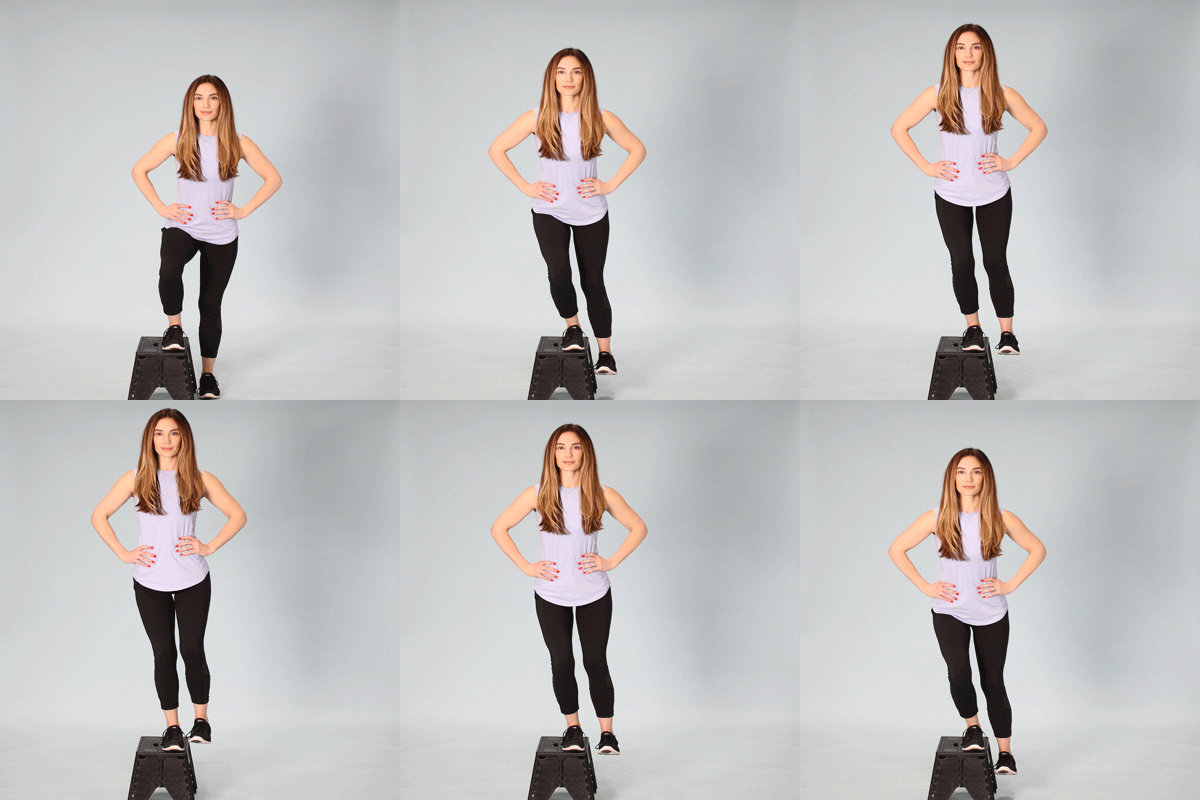
Use a 4-6 inch step. Step up with one leg, bring your other leg to the step, then step down slowly. Do 3 sets of 12 reps each leg, 2-3 times weekly.
Terminal knee extensions
Stand with a resistance band around your knee. Straighten your knee against the band resistance. Do 3 sets of 15 reps each leg daily.
Flexibility and Mobility
Hamstring stretches
Lie on your back, grab behind your thigh, and straighten your leg. Hold 30 seconds, feeling the stretch behind your thigh. Do 2-3 reps each leg, 2-3 times daily. Tight hamstrings alter knee mechanics.
Calf stretches
Lean forward against a wall with your back leg straight. Feel the stretch in your lower leg. Hold 30 seconds each side, 2-3 times daily.
Quad stretches
Stand and pull your foot toward your glutes, keeping knees aligned. Hold 30 seconds each side, 2-3 times daily.
Exercise Modifications by Knee Pain Type
For anterior knee pain (front of knee)
Emphasize quadriceps strengthening (quads sets, leg raises, terminal knee extensions). Strengthen glutes (glute bridges, side-lying leg raises). Progress carefully with squats.
For medial knee pain (inner knee)
Focus on hip abductor strengthening (clamshells, side-lying leg raises, lateral band walks). Add hip external rotator exercises. Stretch your inner thigh. Single-leg balance work is crucial.
For lateral knee pain (outer knee/IT band)
Prioritize gluteus medius strengthening—the most important muscle for this pain. Do clamshells, side-lying leg raises, and lateral band walks with emphasis on glute activation. IT band foam rolling helps (avoid direct pressure on the knee).
For posterior knee pain (back of knee)
Emphasize hamstring flexibility through stretching 2-3 times daily. Add calf stretches. Once flexibility improves, add hamstring strengthening. Avoid aggressive hamstring loading initially.
| Exercise | Sets x Reps | Frequency | Phase |
|---|---|---|---|
| Glute bridges | 3 x 15 | Daily | 1-ongoing |
| Quadriceps sets | 3 x 20 | Twice daily | 1-2 |
| Hamstring stretches | 2-3 x 30 sec | 2-3x daily | 1-ongoing |
| Lateral band walks | 3 x 15 | 2-3x weekly | 2-3 |
| Partial squats | 3 x 15 | Daily | 2 |
| Full squats | 3 x 15 | 2-3x weekly | 3-ongoing |
| Single-leg deadlifts | 3 x 12 | 2-3x weekly | 3 |
| Calf raises | 3 x 20 | 2-3x weekly | 3-ongoing |
Here’s an example of a plan you can track and follow when you go to the gym.
Relieve Knee Pain with Regenesis’ Physiotherapy Exercises
Knee pain responds well to targeted physiotherapy exercises addressing weakness, improving stability, and correcting movement patterns. By following a progressive program, you can resolve knee pain and prevent recurrence.
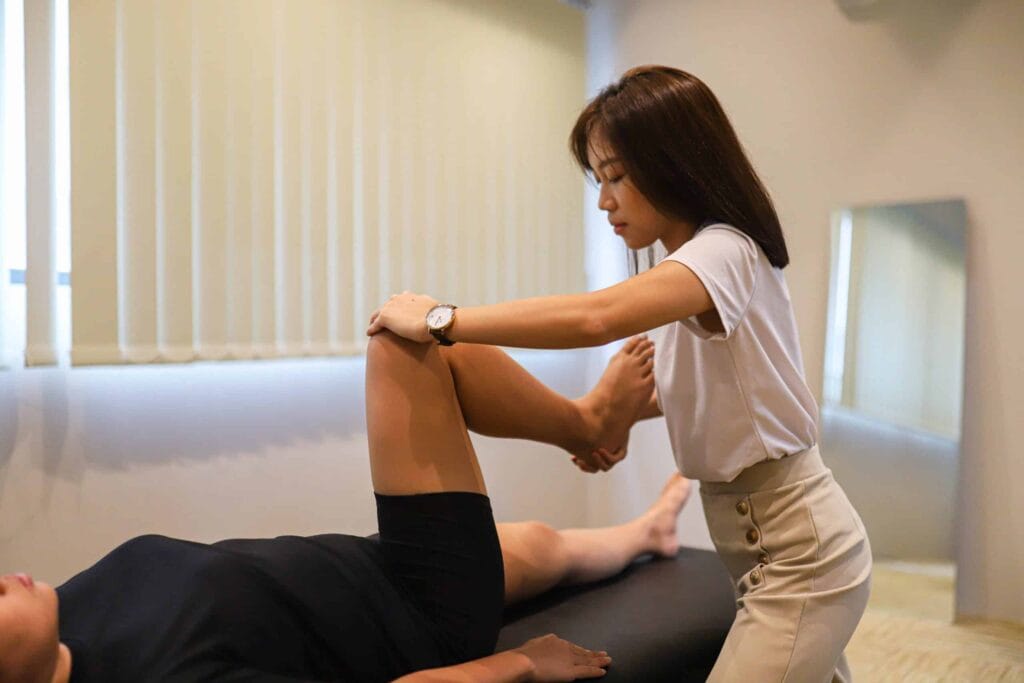
Most knee pain improves significantly within 4-8 weeks of proper exercise, but building lasting strength takes longer. Maintain your exercises even after pain resolves, and your knees will stay strong and pain-free for years to come. If pain persists beyond 4-6 weeks despite consistent exercise, a physiotherapist assessment can identify underlying biomechanical issues and adjust your program for faster, more effective recovery.