
Scoliosis often develops quietly. For many people, these signs are easy to ignore, especially when there’s no pain. But scoliosis is not just a posture issue. It’s a spinal condition that can progress over time if left unchecked.
Early assessment plays a big role in long-term outcomes. Studies show that scoliosis commonly develops during growth spurts in childhood and adolescence, but it can also worsen or first appear in adulthood due to muscle imbalance, prolonged sitting, pregnancy, or age-related changes. The earlier it’s identified, the more options there are to manage it conservatively and reduce future complications.
What Goes Into a Scoliosis Assessment?
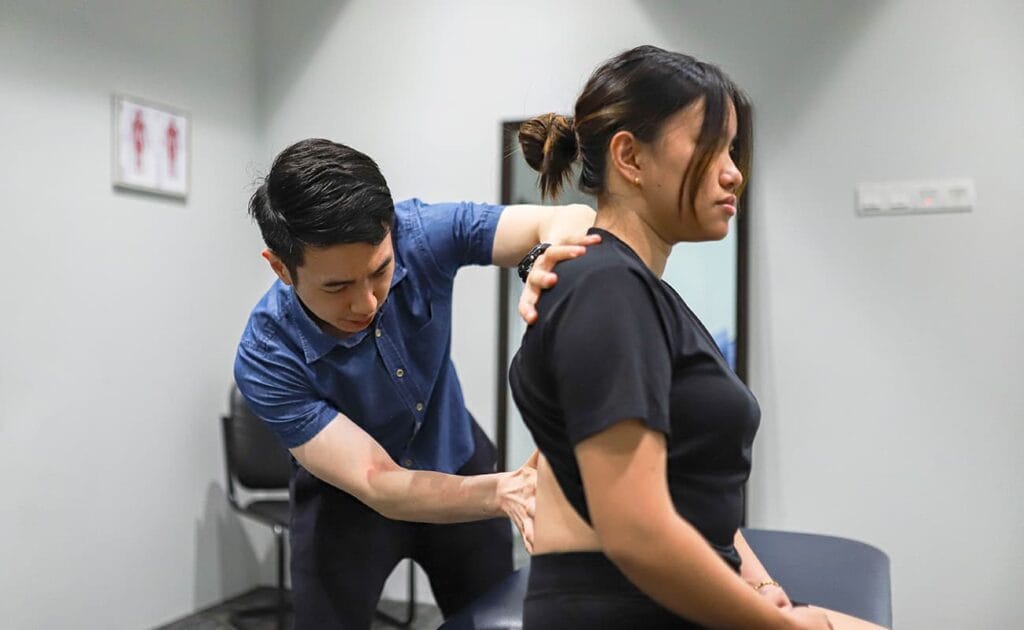
A scoliosis assessment by a physiotherapist goes beyond a quick look at posture. It’s a structured evaluation of how the spine, muscles, and movement patterns work together.
During the assessment, the physiotherapist typically observes standing and sitting posture, spinal curves, shoulder and hip alignment, and rib symmetry. Movement tests help identify stiffness or compensation patterns, while muscle strength and flexibility checks reveal imbalances that may be driving or worsening the curve. Functional tasks like bending, walking, or balancing offer clues about how scoliosis affects daily movement.
This type of assessment is very different from massage or general back treatment. The goal is not just symptom relief, but understanding why the body is compensating the way it does.
Pain Isn’t Always the First Warning Sign
Scoliosis doesn’t always feel painful. Many children, teenagers, and young adults with scoliosis feel perfectly fine especially early on. Pain often appears later, when long-term muscle imbalance leads to joint stress, disc compression, or nerve irritation. Research shows that adults with untreated scoliosis are more likely to develop chronic back pain, reduced spinal mobility, and early degenerative changes. By the time pain appears, the problem is often more complex.
When Children and Teenagers Should Be Assessed
Scoliosis most commonly begins between the ages of 10 and 18, especially during rapid growth phases. This is why early screening matters.
Children should be assessed if parents notice uneven shoulders, hips, or posture, or if a school screening flags possible curvature. Complaints of back tiredness after school, sports asymmetry, or sudden changes in posture during puberty are also reasons to seek evaluation.
Early physiotherapy-led assessment can help monitor progression, guide exercise programs, and reduce the risk of curves worsening during growth.
When Adults Should Consider a Scoliosis Assessment
Scoliosis doesn’t stop at adulthood. Many adults either carry mild curves from youth or develop spinal curvature later in life.
Adult scoliosis can worsen due to prolonged desk work, poor ergonomics, pregnancy-related pelvic changes, or natural ageing of the spine. Symptoms often include persistent back pain, stiffness in the morning, reduced tolerance for standing or sitting, and visible postural changes.
If posture seems to be changing over time or pain keeps returning despite rest, an assessment can clarify whether scoliosis is contributing.
Common Signs of Scoliosis You Shouldn’t Ignore
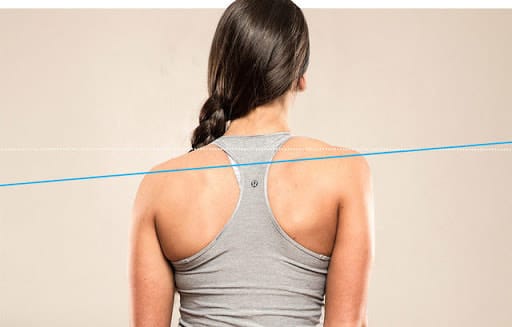
Uneven Shoulders or Shoulder Blades
One of the earliest and most noticeable signs of scoliosis is uneven shoulders. One shoulder may sit slightly higher, or one shoulder blade may stick out more than the other, especially when standing relaxed or wearing fitted clothing. This happens because spinal curvature causes muscles on one side of the back to work harder than the other. Over time, this imbalance pulls the shoulder girdle out of alignment.
An Uneven Waist or Tilted Hips
A waist that looks uneven or hips that don’t sit level can be another subtle clue. Some people notice this when looking in the mirror or when belts, waistbands, or skirts sit crooked.
This often reflects how scoliosis affects the pelvis. As the spine curves, the pelvis may rotate or tilt to compensate, creating asymmetry that can affect walking patterns, sitting comfort, and long-term joint health.
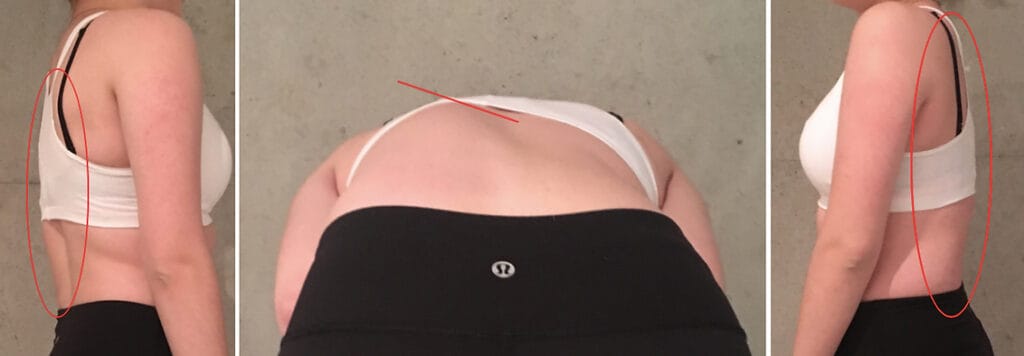
Rib Cage Prominence When Bending Forward
A classic sign of scoliosis appears when bending forward at the waist. One side of the rib cage may appear higher or more prominent than the other.
This rib asymmetry happens because the spine rotates along with the curve, pushing ribs backward on one side. It’s a key observation physiotherapists look for during assessments and can be present even when someone feels no pain at all.
Clothes That Don’t Sit Straight
Sometimes the first hint of scoliosis shows up in the wardrobe. Shirts may twist, hemlines may look uneven, or bra and bag straps may repeatedly slip off one shoulder.
These everyday frustrations are often dismissed as clothing issues, but they can reflect underlying postural imbalance. When the spine and pelvis are misaligned, the body no longer distributes weight evenly so clothes follow the body’s asymmetry.
Ongoing Back Fatigue
Unlike sharp pain, back fatigue can feel like a dull heaviness or tiredness that builds throughout the day. People with scoliosis often report that one side of their back feels more tired or tense, particularly after sitting, standing, or walking for long periods.
This happens because muscles on one side are constantly overworking to support the curved spine, while others become underused. Over time, this imbalance can lead to pain if left unaddressed.
Muscle Stiffness
Stiffness that consistently affects one side of the back especially in the morning or after inactivity can also be a sign. This isn’t the usual “slept wrong” stiffness that eases quickly. Instead, it reflects uneven joint loading and muscle tension caused by spinal curvature. The body adapts to the curve, but flexibility gradually decreases in certain areas.
Leaning Stance
Some people describe a strange sensation of leaning to one side, even when they believe they’re standing upright. When they correct themselves, it can feel uncomfortable or unnatural. This occurs because the brain adapts to the curved posture over time and starts to treat it as “normal.” A physiotherapy assessment helps retrain both posture and body awareness before these patterns become deeply ingrained.
Red Flags That Call for Immediate Assessment
Some signs shouldn’t be delayed such as:
- rapidly worsening asymmetry;
- increasing pain that doesn’t improve with rest, or;
- symptoms like numbness, tingling, or weakness in the arms or legs.
These may suggest nerve involvement or significant spinal stress and should be evaluated early to prevent further complications.
How Physiotherapy Helps After a Scoliosis Diagnosis
Physiotherapy plays a key role in scoliosis management, especially for mild to moderate curves. Treatment focuses on improving spinal control, reducing muscle imbalance, and supporting better posture during daily activities.
After the initial assessment, the physiotherapist explains the findings in clear, simple terms. Patients usually receive a personalised exercise plan and guidance on posture, daily habits, and follow-up scheduling. Your physiotherapist can also suggest certain exercises to help maintain your flexibility and strength, or maybe address any weaknesses in your daily movements.
Progress is monitored over time, especially during growth periods or if symptoms change. Adjustments are made as the body adapts.
Get a Scoliosis Assessment with Regenesis Physiotherapy

Scoliosis doesn’t always hurt, and that’s exactly why it’s easy to miss. But posture changes, imbalance, and recurring discomfort are worth paying attention to at any age. A scoliosis assessment by a physiotherapist offers clarity, guidance, and a proactive path forward. Sometimes, the best time to act is before the pain starts.