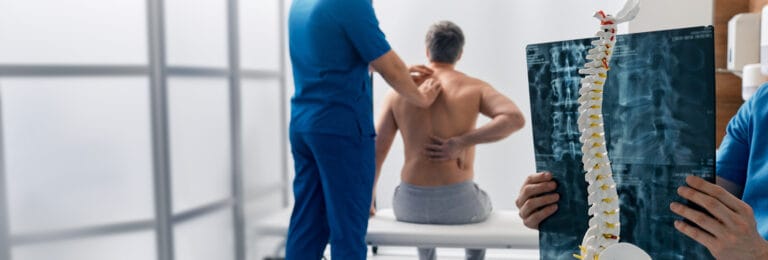
Physiotherapy exercises play an important role in helping people with scoliosis move better, feel stronger, and reduce pain at any age.
Because scoliosis causes the spine to curve and rotate, the muscles on each side of the body do not work evenly. One side often becomes tight and overworked, while the opposite side becomes longer and weaker. Over time, this imbalance can lead to poor posture and visible asymmetry, muscle fatigue or stiffness, back or neck pain, and reduced movement in the ribs or hips.
Physiotherapy focuses on restoring balance by training the body to support the spine more evenly, not by forcing the spine straight.
Types of Physiotherapy Exercises Used for Scoliosis
Generic workouts may worsen imbalance if done incorrectly. That’s why scoliosis-focused physiotherapy uses targeted movement strategies. When your physiotherapist creates an exercise program, they’ll take into account what your body is capable of and which aspects of exercise you’ll need to relieve symptoms.
So they may include some of the following types of physiotherapy exercises:
Stretching Exercises for Tight Muscles
Tight muscles typically form on the concave side of the spinal curve. These areas often feel stiff, sore, or compressed. Stretching helps improve flexibility, reduce discomfort, and allow the spine to move more freely. Over time, better flexibility can also make postural correction easier.
Strengthening Exercises for Weaker Muscles
On the opposite side of the curve, muscles tend to be longer and weaker. Strengthening these muscles helps the body hold itself in better alignment. Physiotherapists don’t have you lifting heavy weights. Instead, they focus on controlled, precise movements that activate the right muscles without overloading the spine.
Core Stabilisation Exercises
The core muscles act like a natural brace for the spine. In scoliosis, these muscles often work unevenly. Core stabilisation exercises train deep muscles that support spinal control during everyday activities like sitting, walking, and lifting. This helps reduce strain on the curved segments.
Postural Correction Exercises
Postural exercises improve body awareness. Many people with scoliosis don’t realise how shifted or rotated their posture has become.These exercises retrain alignment habits, helping patients recognise and correct asymmetry during daily movement.
Examples of Stretches That May Be Suggested for Scoliosis

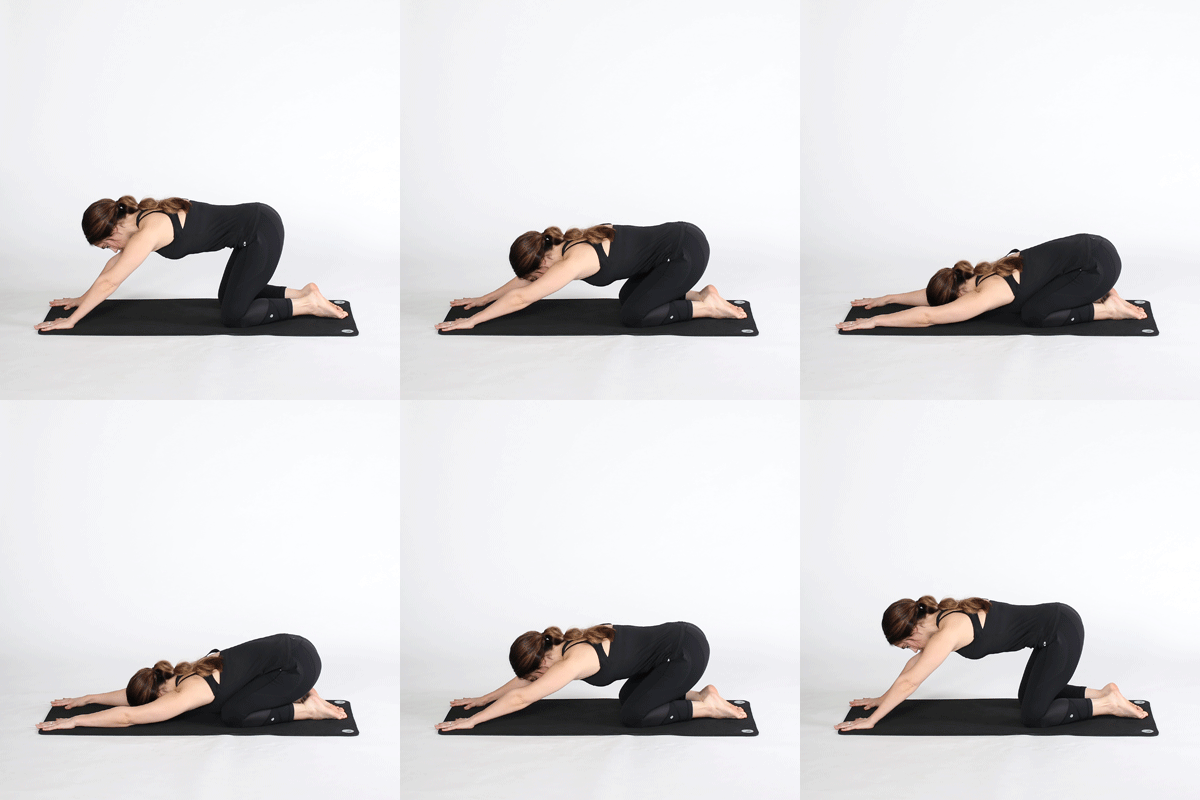
Cat–Cow Stretch
The cat–cow stretch is a gentle movement that helps mobilise the entire spine. It involves slowly rounding the back and then arching it while moving with the breath. This back-and-forth motion encourages spinal flexibility and can reduce stiffness, especially in people who feel tight through the mid or lower back. For scoliosis patients, it also improves awareness of spinal movement in a controlled, low-impact way.
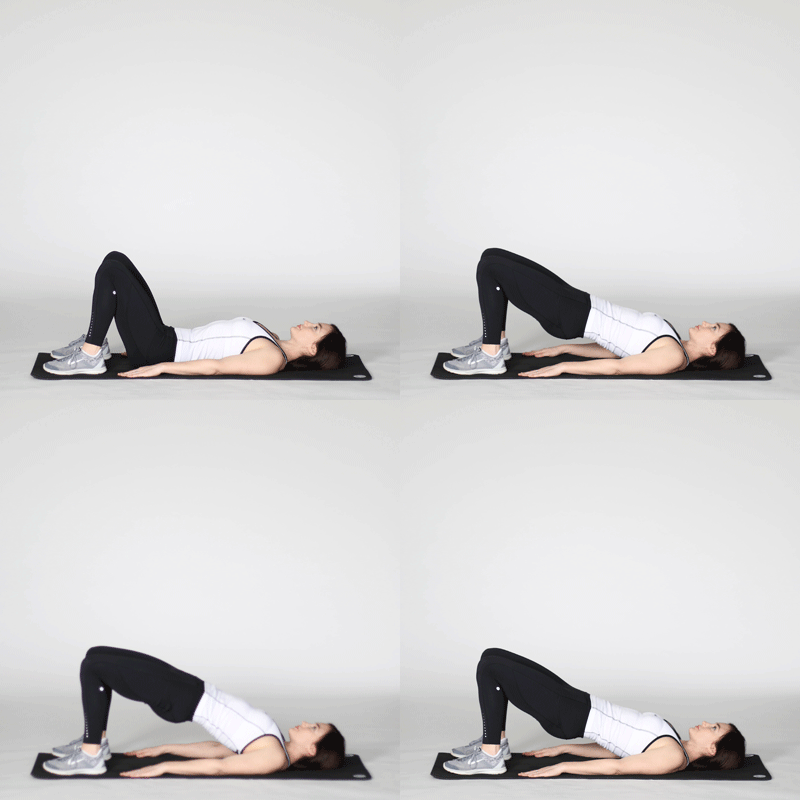
Pelvic Tilts
Pelvic tilts target the relationship between the pelvis and the lower spine, which is often altered in scoliosis. By gently rocking the pelvis forward and backward while lying on the back or standing, these movements help activate deep core muscles and reduce excessive arching or flattening of the lower back. Over time, pelvic tilts can improve spinal control and reduce lower back strain.
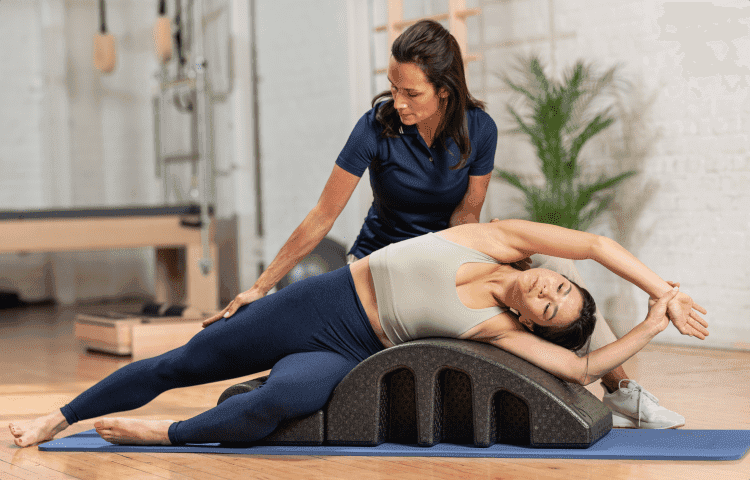
Side-Bending Stretch
Side-bending stretches focus on lengthening muscles that are shortened on one side of the spine. Since scoliosis curves often cause one side of the body to feel tighter than the other, this movement can help restore balance. When done slowly and with proper guidance, side-bending improves flexibility and can relieve the feeling of asymmetrical tightness.
Child’s Pose
Child’s pose is a resting stretch that gently elongates the spine while relaxing the shoulders and hips. It’s particularly helpful for relieving back tension after long periods of sitting or standing. For people with scoliosis, this position can provide a sense of decompression and calm tight spinal muscles without placing stress on the joints.
Thoracic Rotation Stretch
Thoracic rotation exercises focus on the upper and mid-back, an area that often becomes stiff in scoliosis. These movements involve gently rotating the torso while keeping the hips stable. Improving rotation in the thoracic spine can help reduce compensations in the neck and lower back and support more natural movement patterns.
Hip Flexor Stretch
Tight hip flexors can worsen pelvic tilt and increase strain on the lower spine. Stretching these muscles helps restore balance between the hips and the spine, which is especially important for individuals with scoliosis-related posture changes. This stretch can improve standing and walking comfort by reducing pull on the lower back.
How Often Should Scoliosis Exercises Be Done?
Consistency matters more than intensity. Most physiotherapy programs involve guided sessions combined with a home exercise routine. Since the process is expected to be gradual, patients usually only see improvements over weeks to months, not days. Regular reassessment from a physiotherapist ensures exercises remain safe and effective as the body adapts.
When to See a Physiotherapist for Scoliosis
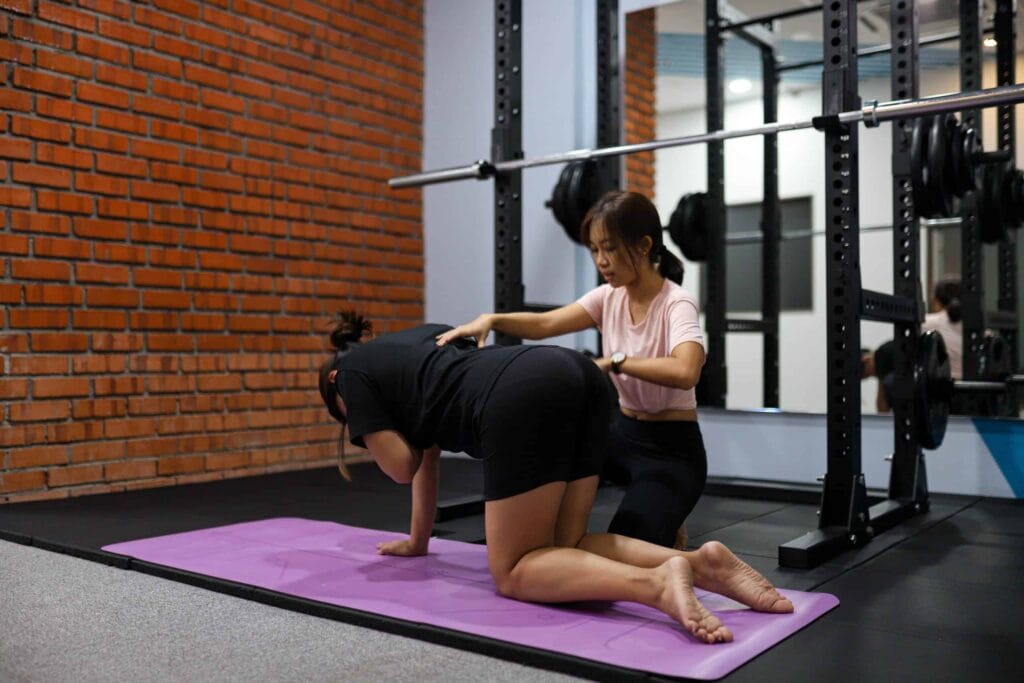
Physiotherapy is especially helpful if scoliosis is causing pain, posture changes, stiffness, fatigue, or movement limitations. It’s also recommended when X-rays show progression or when daily activities become uncomfortable. Early intervention often leads to better long-term outcomes.
Get Started with Scoliosis Physiotherapy with Regenesis Physiotherapy

Scoliosis is a long-term condition, but it does not have to define daily life. With the right physiotherapy exercises, many people move better, stand taller, and feel more confident in their bodies.
If you’re experiencing back pain, stiffness, or noticing uneven shoulders or hips, a professional assessment can help clarify what’s happening and what can be done. Book a consultation with Regenesis Physiotherapy to take the first step toward better movement, improved comfort, and a clearer plan for managing scoliosis long term.